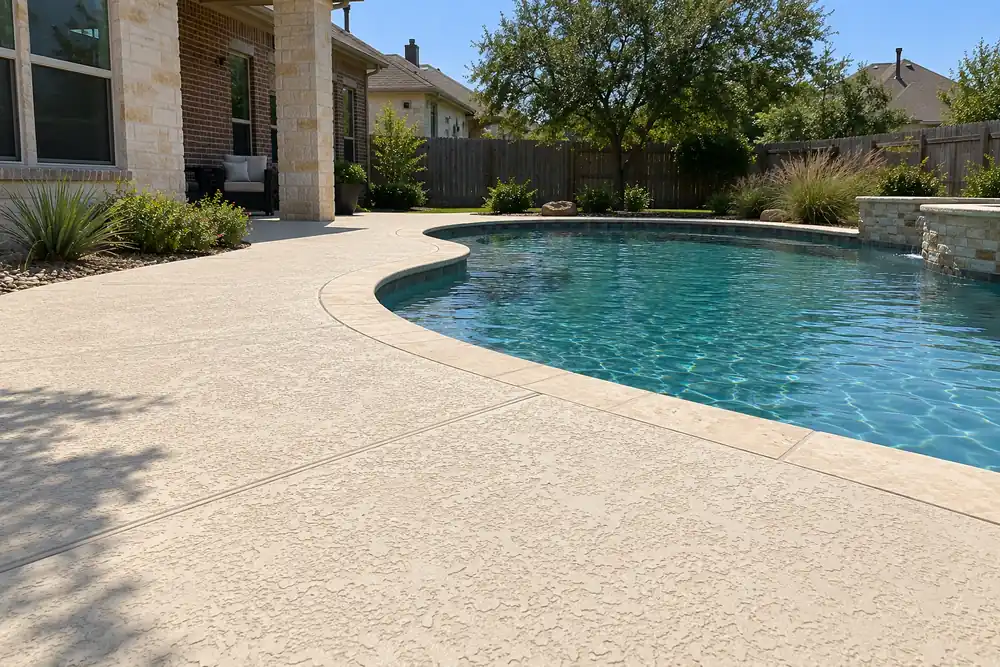
Garland Elite Concrete: Driveways, Sidewalks, Patios, Stamped & Resurfacing, Residential & Commercial
Serving Garland, Texas
Garland Elite Concrete is a residential and commercial concrete contractor in Garland, Texas: we pour and replace driveways, build parking lots, fire lanes and slabs for businesses, and install stamped and decorative concrete, patios, sidewalks and walkways. We also repair, level, resurface and seal older concrete. Front and side yard driveways in Garland must be reinforced concrete or concrete pavers, and the City's standard for the concrete is 4 inches thick with Number 3 rebar 18 inches on center, set on rebar chairs.
The most common soil mapped in Garland is Houston Black clay, which the USDA describes as having high shrink-swell potential, cracking ½ to 4 inches wide in dry spells. Its soil survey rates that clay "Very limited" for concrete driveways and sidewalks, so we'll talk through base, reinforcement, joints and drainage along with the finish you want. Estimates are free, and calls and estimate requests are answered 24/7.
Call or request a free estimate any time, 24/7
No charge · answered 24/7
Get free estimates
Why call Garland Elite Concrete for residential and commercial concrete
What to expect when you call about a driveway, a slab, a parking lot or a stamped patio.
Free estimates before anything is booked
Tell us the size, what's there now and the finish you want. The estimate costs nothing, and nothing is booked until you decide.
Calls answered 24/7
Calls and estimate requests are answered around the clock, weekends included.
Homes and businesses
Driveways, patios, walks and stamped finishes for homeowners; parking lots, fire lanes, curb and gutter, floors and slabs for businesses, apartments and industrial sites.
Plans that start with the clay
Houston Black clay swells when wet and shrinks when dry. Before a price is set, we'll talk through the base, reinforcement, joint layout and drainage your site calls for.
City permit rules, explained
New and widened driveways need a City of Garland permit, and approaches in the city right-of-way need their own. We'll tell you which ones your job involves.
Real specs and price ranges
You'll find actual thicknesses, strengths and City rules on these pages, not vague promises. Price ranges are typical Dallas-area or national averages, not quotes.
Call or request a free estimate any time, 24/7.
(945) 441-5958Concrete driveway installation and replacement
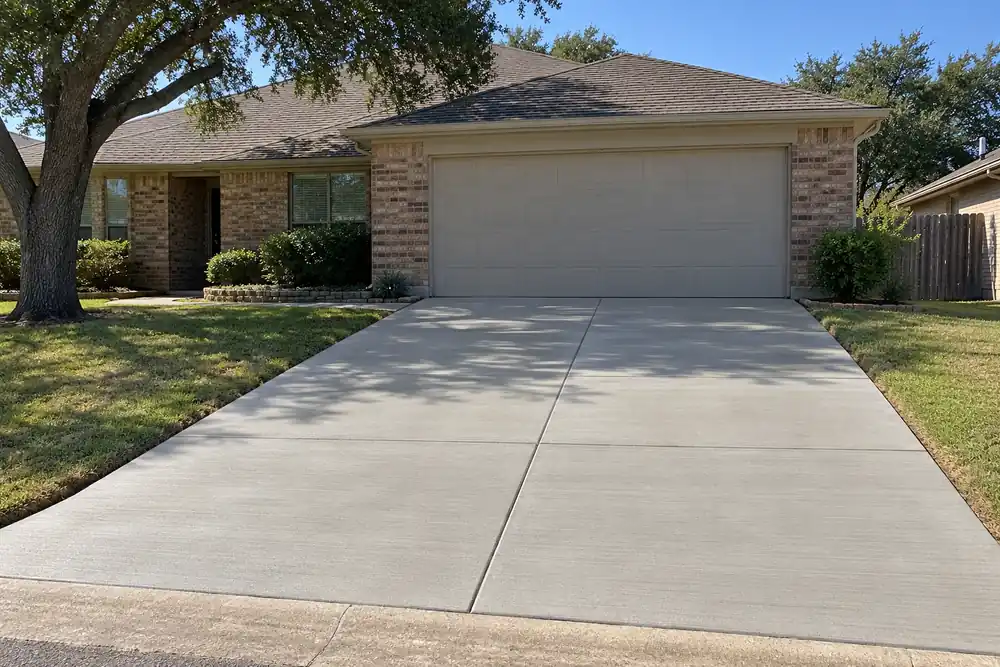
Driveway work covers new drives, replacements, extensions and the approach at the street. Garland's housing has a median year built of 1978 (Census Bureau, 2020–2024 American Community Survey), and while a properly installed driveway in moderate conditions might last 30 to 40 years, driveways in the Dallas area often reach their limit sooner. Our page on concrete driveway installation and replacement covers thickness, permits and cost in full.
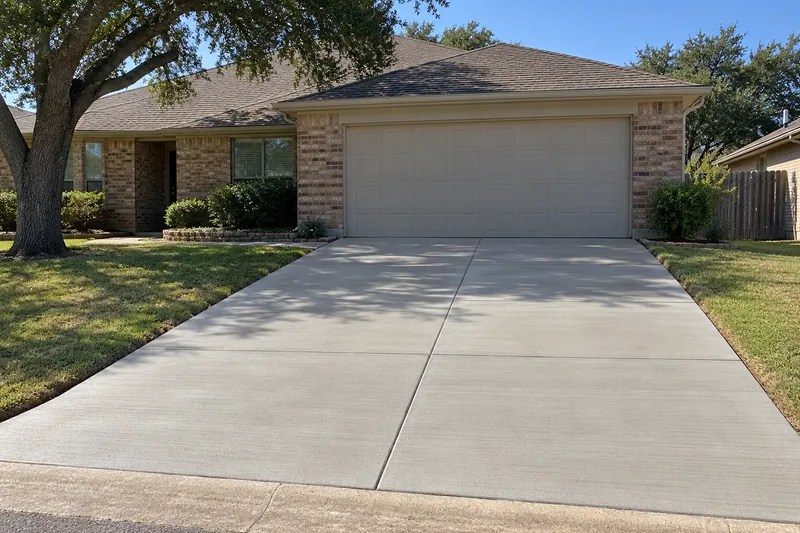
New concrete driveways
Four inches is generally enough for cars and SUVs of 3,000 to 6,000 pounds, and 5 or 6 inches for trucks or large RVs of 12,000 pounds or more. For width, the usual guidance is at least 10 feet per vehicle, 12 feet preferred for a single drive, and 18 to 20 feet of length per car.
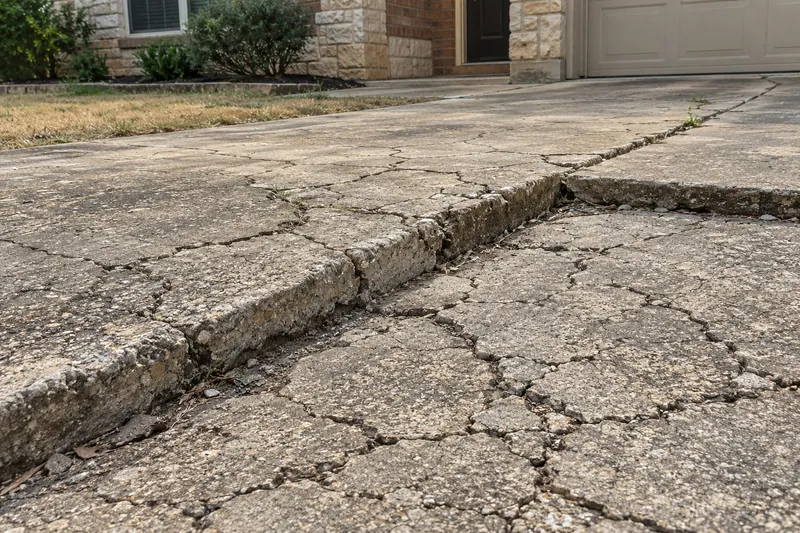
Driveway replacement
The usual signs that call for replacement are alligator cracking, sections sitting more than an inch or two out of level, spalling over 20 to 30 percent of the surface, and cracks wider than a quarter inch. Past about 30 years, full replacement is usually the better choice.
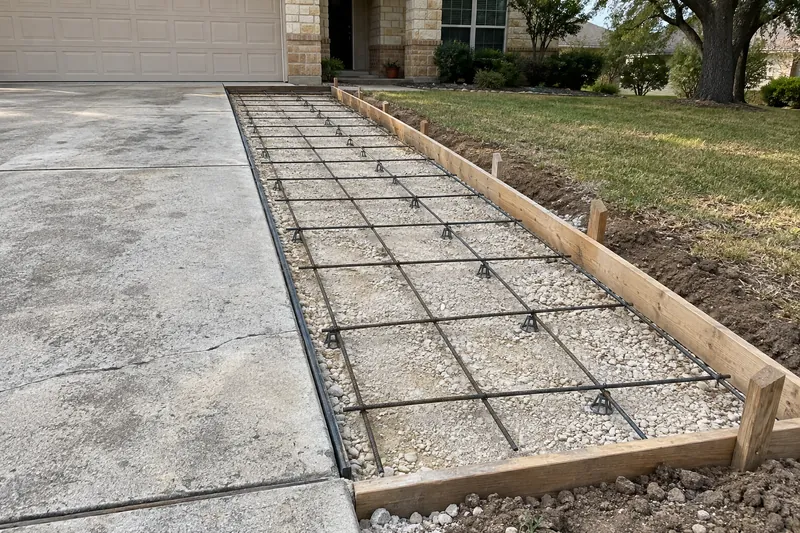
Extensions and widening
Widening a driveway needs a city permit. The City caps driveways at 50% of a yard, or 65% for a circular drive with two approaches, and where new concrete meets an existing approach, sidewalk or curb, a felt or mastic expansion joint goes between them.
Driveway repair
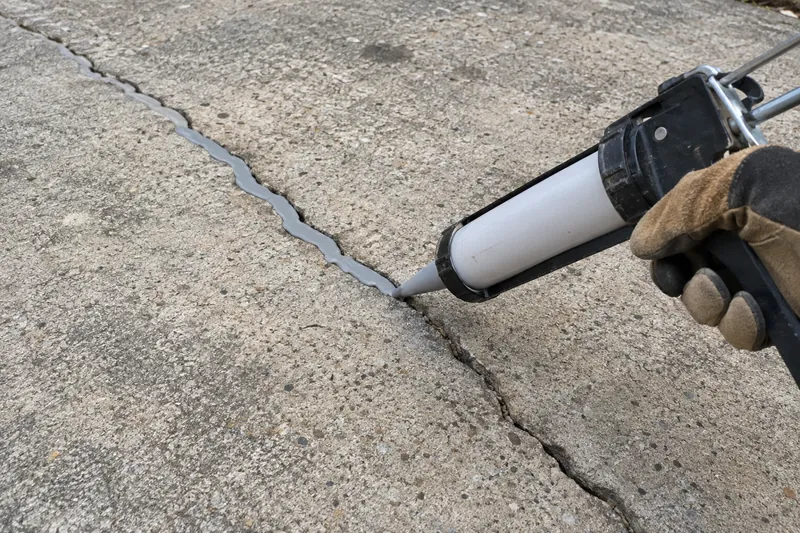
Thin cracks of about ⅛ inch can usually just be repaired, and wider cracks, spalling and discoloration can often be covered with resurfacing. A drive that sinks in spots usually has a poorly compacted subgrade or erosion under it, and can often be raised by slabjacking.
Aprons and approaches
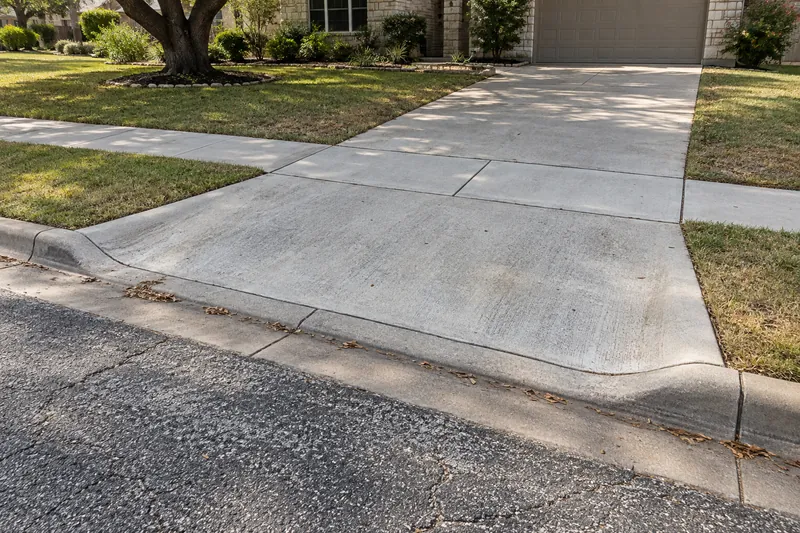
The City's standard detail for a residential approach calls for 5-inch Class P1 concrete (4,000 psi) with #4 bars 18 inches apart each way, at least 10 feet wide and 20 feet at the curb, with a ¾-inch redwood expansion joint at the property line. Approaches get their own permit, reviewed by the Transportation Department.
Call or request a free estimate any time, 24/7.
(945) 441-5958Commercial concrete for businesses, apartments and industrial sites
The City counts more than 30 million square feet of industrial space in Garland, with vacancy around 4% as of August 2026, and its core industrial district sits in the southwest of the city. For parking lots, fire lanes, floors and site paving, see our commercial concrete contractor page.
Parking lots, fire lanes and dumpster pads
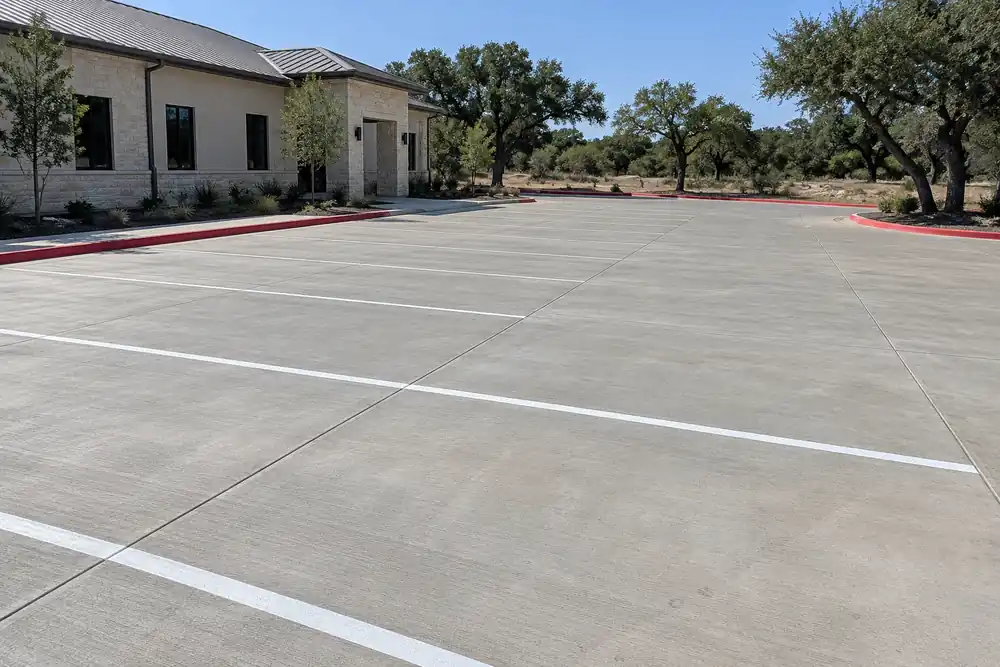
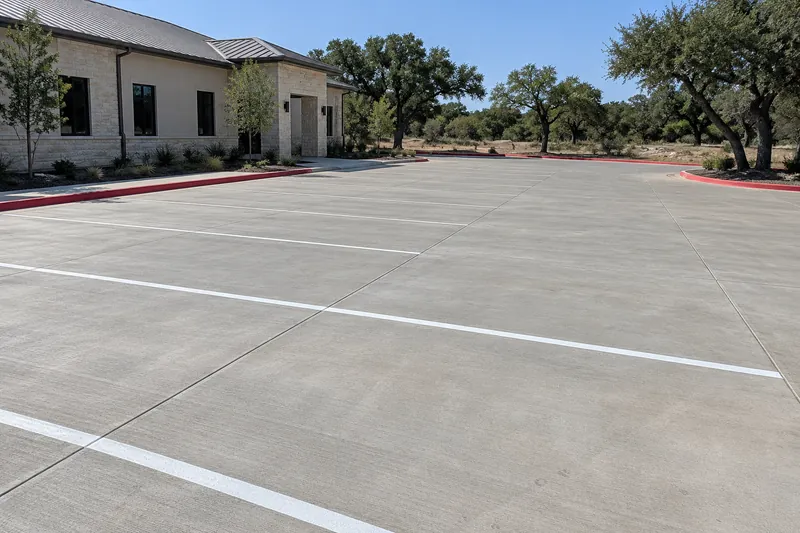
Garland's Technical Standards Manual sets parking lots at a minimum 5 inches of reinforced concrete over an engineered subbase, fire lanes at 6 inches of reinforced 4,000 psi Class P1 concrete, 24 feet wide, and refuse enclosures on a 12-by-16-foot pad 6 inches thick. Its typical stall is 9 by 18 feet with a 24-foot aisle.
Industrial floors and slabs
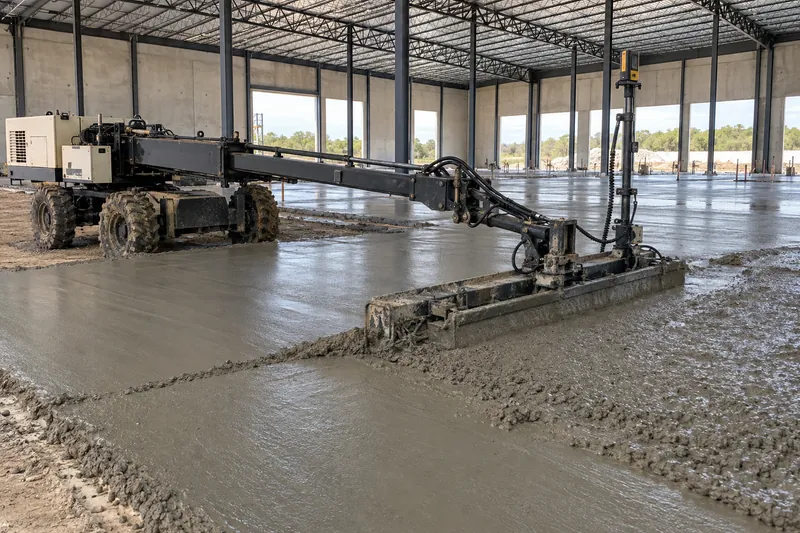
Floor flatness is measured in FF and FL numbers; ACI 302.1R's typical values run 35/25 for a warehouse floor with moderate or heavy traffic. NRMCA recommends no more than 3% air in hard-troweled floor slabs, and metal dowels in slabs that carry heavy loads.
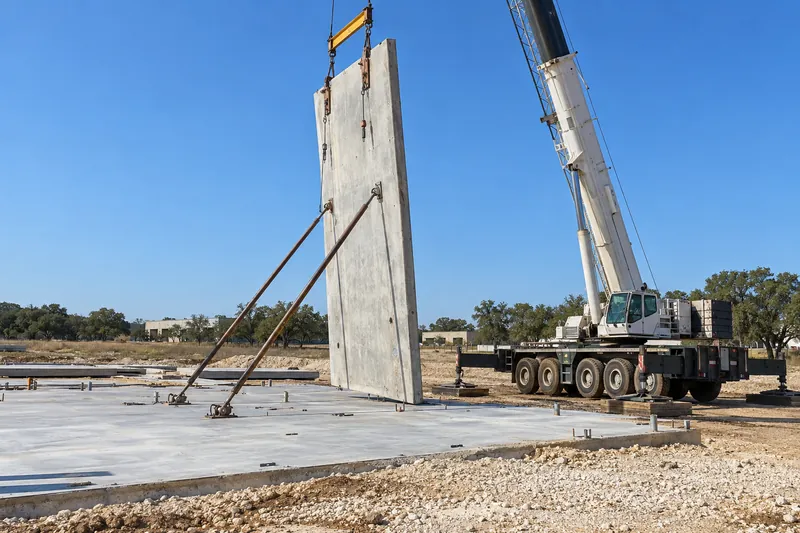
Tilt-wall construction
The Tilt-Up Concrete Association defines tilt-up as casting large concrete panels on site and raising them with a crane. Wall panels are usually 6 to 8 inches thick, and from California through Texas, tilt-up is the method of choice for warehouses, big-box stores and schools.
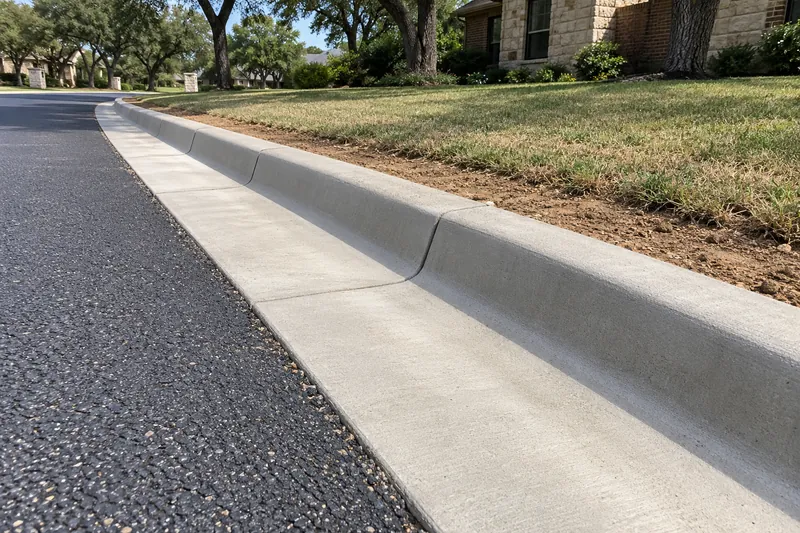
Curb and gutter
TxDOT builds curb and gutter from Class A concrete, 3,000 psi minimum, and cures it for at least 72 hours. The City's street paving uses 4,000 psi Class P1 concrete with #4 bars 18 inches on center, and any curb, gutter or driveway work on public property needs city permits first.
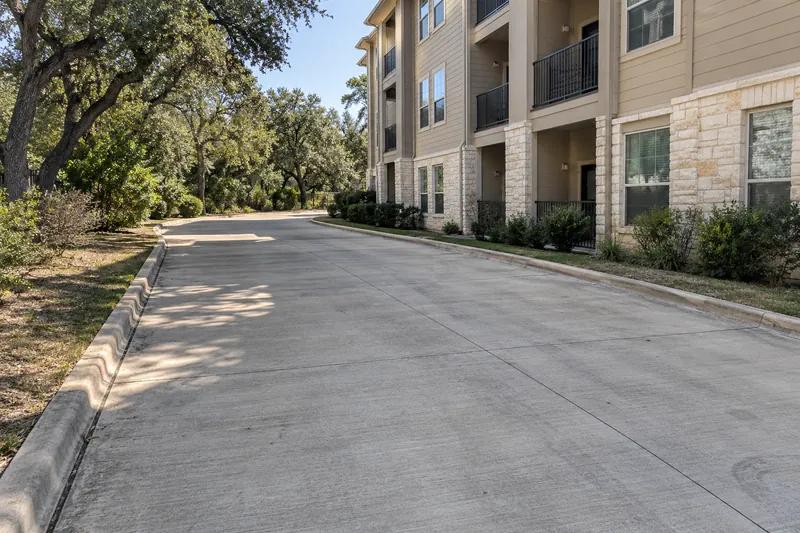
Apartments and multifamily
The American Concrete Institute lists multifamily housing among the typical users of concrete parking lots. Garland doesn't allow tandem parking at multifamily or retail developments, and it requires barrier-free ADA ramps across any multi-family driveway.
Call or request a free estimate any time, 24/7.
(945) 441-5958Stamped and decorative concrete
Decorative work turns a plain slab into a patio, walk or drive with pattern and color. Our stamped concrete page goes through patterns, colors, sealing and cost.
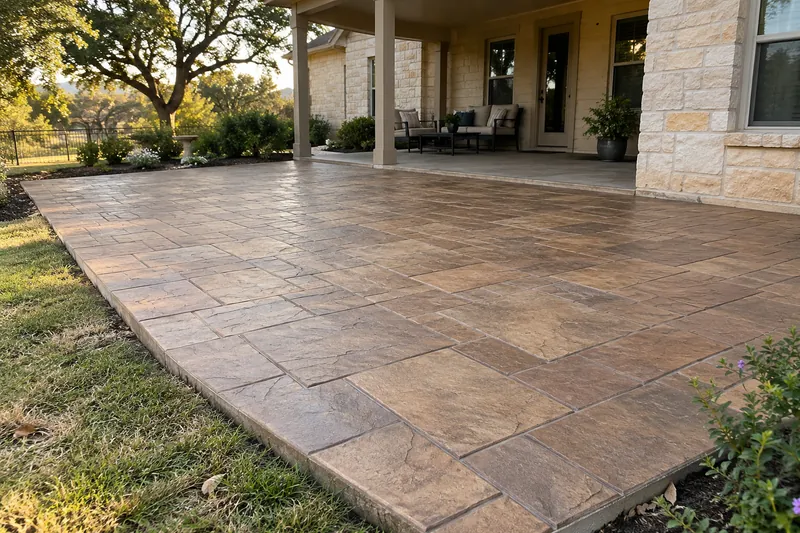
Stamped patios, walks and driveways
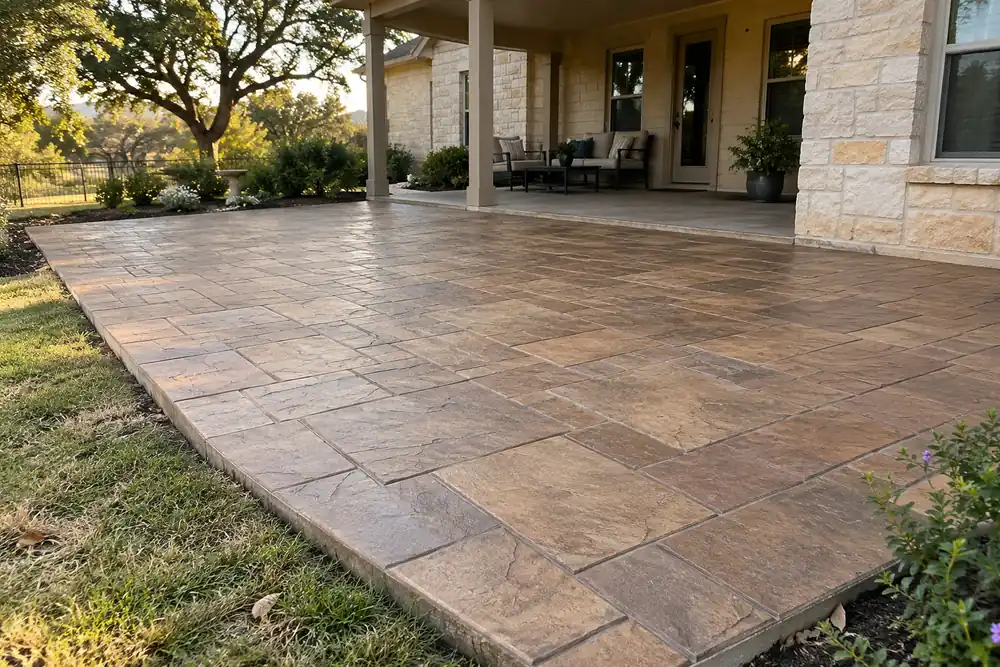
Color comes from integral color mixed through the batch or from color hardener broadcast on the surface, which gives more intense color and sharper imprints. A release agent adds the accent color, and 70% to 80% of it is washed off after the concrete hardens. In the Dallas area, the price changes with the pattern, from brick and slate to cobblestone and wood plank.
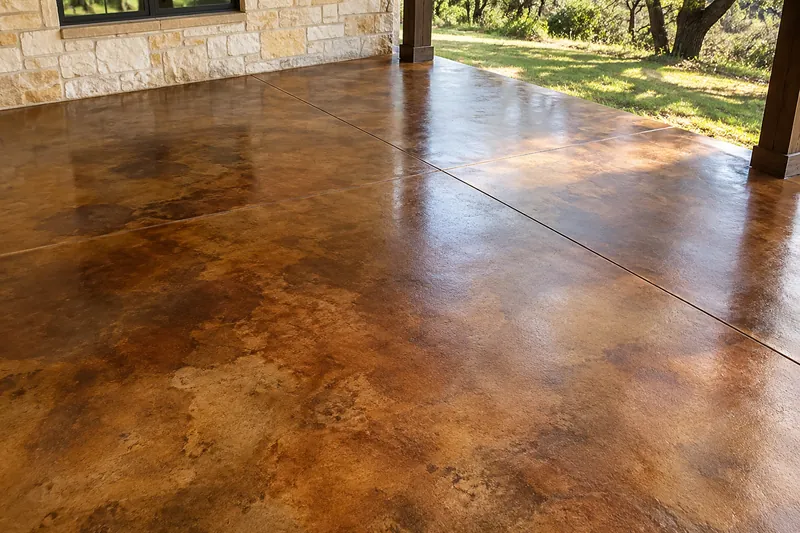
Stained and colored concrete
Acid stains react with the lime in concrete and come mostly in earth tones: tans, browns, terra cottas and soft blue-greens. Water-based stains give more consistent color in dozens of shades, including black, white and metallic tints. On properly prepared concrete, stain color won't fade, chip or peel.
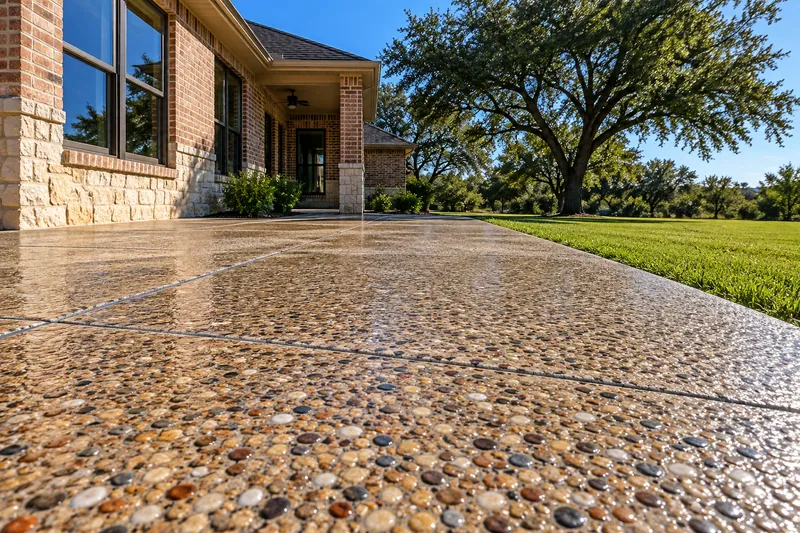
Exposed aggregate
Decorative stone is seeded into the fresh surface and exposed once the top paste is washed off. The result is rugged, nonskid and resistant to heavy traffic, with a 30-plus-year lifespan when properly installed, though the extra labor makes it cost more than basic concrete.
Call or request a free estimate any time, 24/7.
(945) 441-5958Concrete patios, sidewalks, steps and pool decks
The outdoor work around a house, built to the slopes and dimensions the codes set.
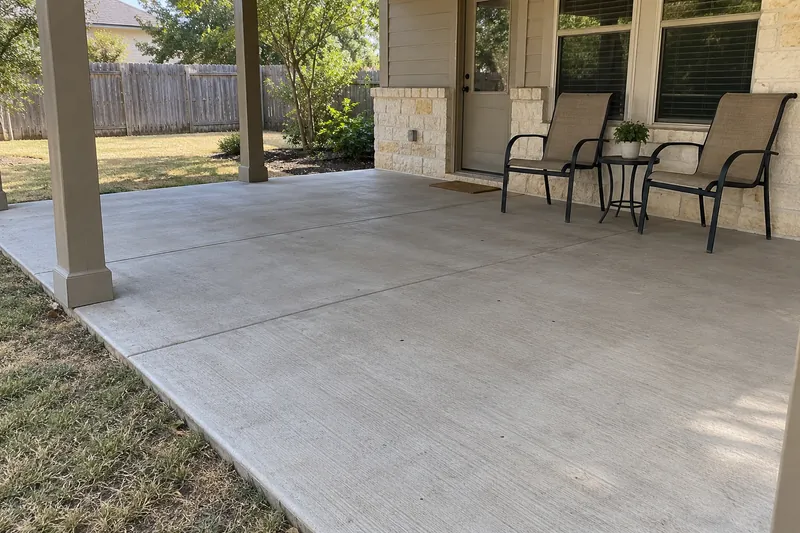
Patios and patio extensions
A patio is generally poured at least 4 inches thick, or 5 to 6 inches under a hot tub or outdoor fireplace. The International Residential Code, which Garland has adopted in its 2015 edition, requires paving within 10 feet of the house to slope at least 2 percent away from it.
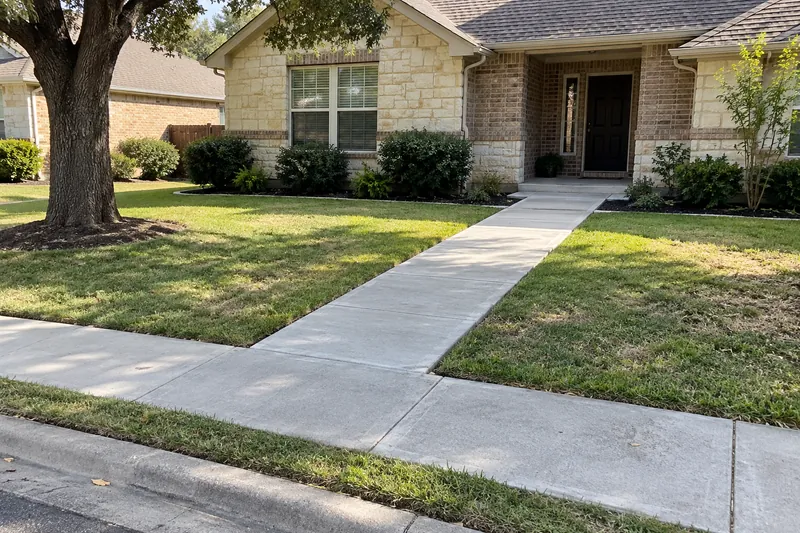
Sidewalks and walkways
The City's standard sidewalk is 4 feet wide for homes and 6 feet for commercial sites, 4 inches thick with #3 bars 24 inches apart each way, sloped 1% toward the street. Repairs to the public sidewalk need a permit; the private walk to your front door doesn't.
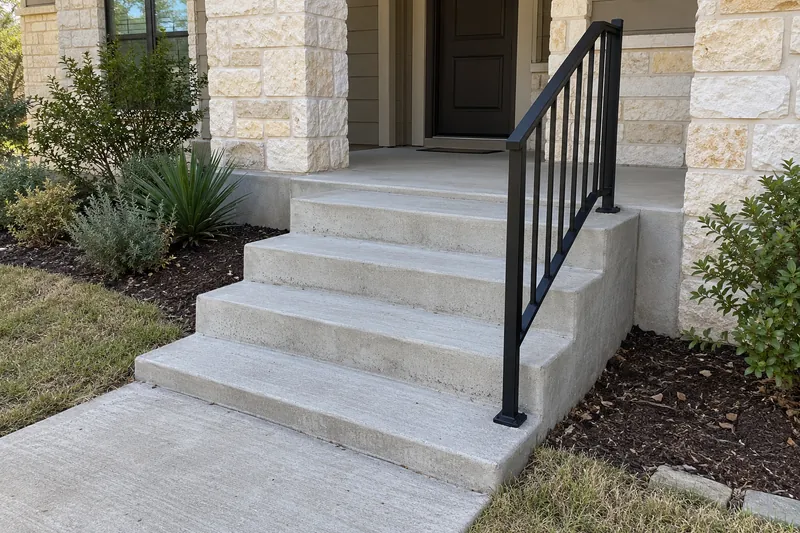
Steps and porches
Under the IRC, stair risers can be no taller than 7¾ inches and treads no shallower than 10 inches, and any flight with four or more risers needs a handrail 34 to 38 inches above the nosings.
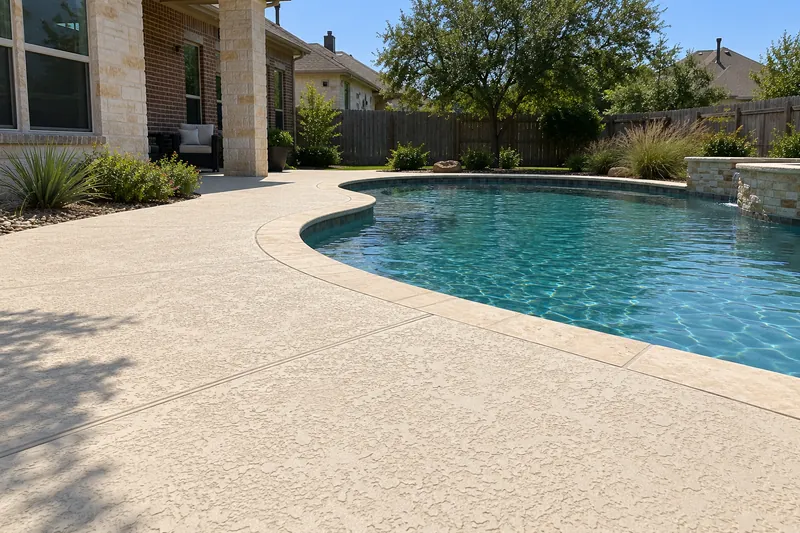
Pool decks
A broom or rock salt finish adds slip resistance to a pool deck, and exposed aggregate is especially well suited because it's highly slip resistant. Mortex invented its original Kool Deck topping in 1962 and says it significantly lowers the surface temperature of concrete.
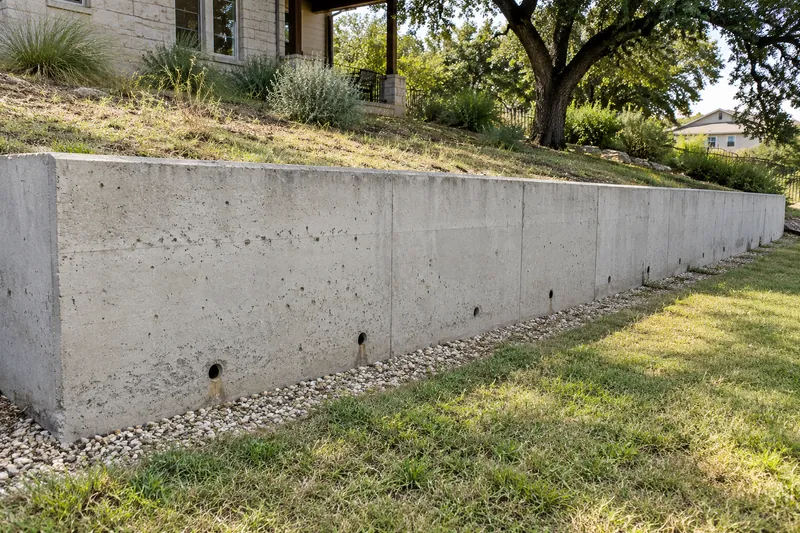
Retaining walls
The City requires a permit for a retaining wall if any part reaches 4 feet or it holds a surcharge, an extra load such as vehicles, a building or added soil. A wall holding a surcharge also needs an engineer's report.
Call or request a free estimate any time, 24/7.
(945) 441-5958How a concrete driveway or slab gets built
Every site differs, but a driveway, patio or slab goes through the same six stages, each with a standard behind it.
Free estimate and site check
We look at the size, access, drainage and what is there now, and talk through thickness, reinforcement and finish. The estimate is free.
Permits and utility locates
New and widened driveways need a city permit, and approach work needs its own. Garland's construction notes require a call to Texas811, with utilities marked before work starts.
Tear-out, base and forms
Old concrete is broken out and hauled away, soft spots are dug out and replaced, and a compacted base goes down. At least 4 inches of subbase and base in total is the usual recommendation.
Reinforcement and the pour
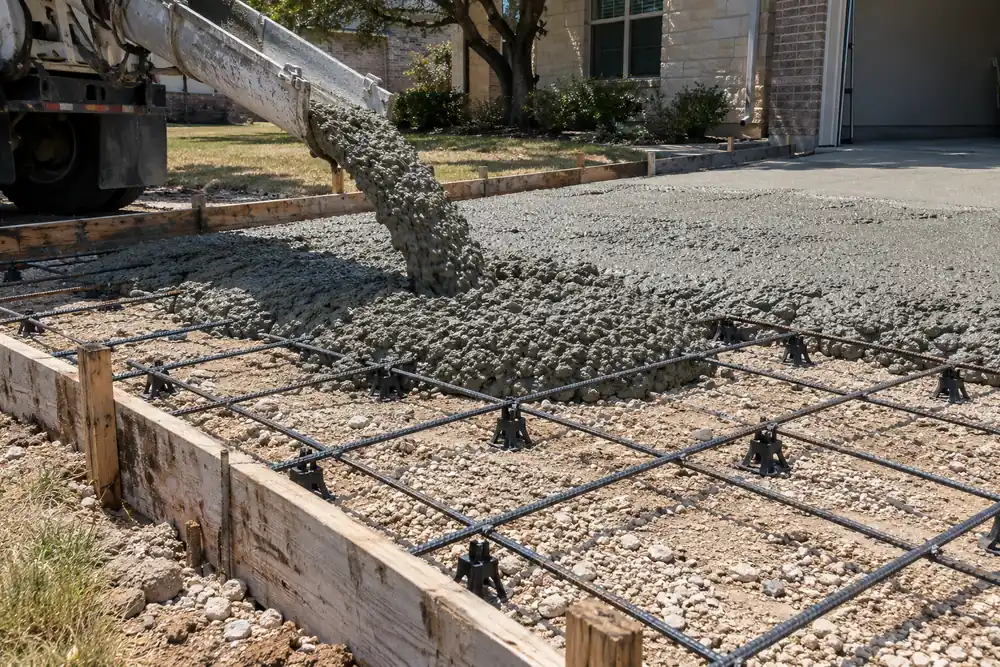
Rebar sits on chairs so it ends up inside the slab: the City's driveway standard is Number 3 bars 18 inches on center, and the steel only works if it sits at or just above mid-depth.
Finishing and joints
NRMCA says to give exterior flatwork a broom texture for grip and never to sprinkle water or cement on to ease finishing. Conventional saw-cut joints go in within 4 to 12 hours of finishing.
Curing and first use
Curing starts right after finishing and typically runs 3 to 7 days (NRMCA). The usual timeline: walk on it after 48 hours, drive a car on it after 7 to 10 days, all normal traffic after 30 days.
How long a job takes. The pour itself is the short part; permits, weather and curing set the calendar. The City's Building Inspection line inspects the next business day for requests made before midnight, and a parking lot typically takes 2 to 4 weeks to install.
Call or request a free estimate any time, 24/7.
(945) 441-5958Concrete mix, reinforcement, joints and finishes
Mix strength and air
For exterior slabs, the National Ready Mixed Concrete Association advises ordering 4,000 psi concrete, consistent with ACI 332, the residential concrete code, or 3,500 psi where the slab won't stay continuously moist and won't see deicing chemicals, with 6 percent air and a 3 to 5 inch slump. Concrete mixed for the Dallas area should include air-entrainment admixtures, whose microscopic bubbles give freezing water room to expand.
Rebar, wire mesh and fibers
Concrete's tensile strength is only about 15% of its compressive strength, which is why slabs crack when they bend. NRMCA is plain that mesh and rebar can't prevent cracking, but properly placed reinforcement limits crack width, with at least 2 inches of concrete cover. Synthetic fibers at 1 to 2 pounds per cubic yard reduce plastic shrinkage cracks.
Control and isolation joints
Joints are planned cracks. NRMCA spaces them at 24 to 36 times the slab thickness, about 10 feet for a 4-inch slab and never more than 15 feet, cut at least a quarter of the slab deep. The Illinois Ready Mixed Concrete Association adds a centerline joint on driveways wider than 12 feet, and NRMCA uses isolation joints to separate a driveway or patio from sidewalks, garage slabs and stairs.
Finishes and sealers
A broom finish gives exterior flatwork its grip; the decorative finishes are described above, and sealers in the questions below.
- Control joint cut at least a quarter of the slab depth (NRMCA)
- Broom finish for a non-slip surface (NRMCA)
- 4-inch concrete, the City of Garland driveway standard
- Number 3 rebar, 18 inches on center, on chairs (City of Garland)
- Compacted base: at least 4 inches of subbase and base
- Clay subgrade: Houston Black is the most common soil mapped in Garland (USDA)
Call or request a free estimate any time, 24/7.
(945) 441-5958How much does concrete work cost in Garland?
The closest price figures for Garland are 2026 averages for Dallas, next door. They're averages, not our prices: the real number depends on size, access, tear-out, soil work and finish, and needs a look at the site. Call or send the form for a free estimate on your job.
- Average driveway project
- $6,598
- Most projects
- $2,784–$14,950
- 10 x 20 ft (200 sq ft)
- $1,000–$2,000
- 24 x 24 ft (576 sq ft)
- $2,900–$5,800
- Demolishing an old driveway
- $1.10–$1.80 / sq ft
- Soil stabilization
- $2–$4 / sq ft
Typical Dallas-area driveway prices, 2026. Averages, not a quote.
- Per square foot
- $8–$28
- Average project
- $3,751
- 100 sq ft patio
- $800–$2,800
- 500 sq ft driveway
- $4,000–$14,000
- Brick pattern, one color (average)
- $8 / sq ft
- Wood plank pattern (average)
- $16 / sq ft
Typical Dallas-area stamped concrete prices, 2026. Averages, not a quote.
- Concrete patio, typical range
- $1,718–$4,095
- Concrete walkway, typical range
- $1,650–$2,474
- Driveway repair, typical range
- $747–$2,772
- Mudjacking a sunken slab
- $626–$1,282
- Sidewalk repair or replacement
- $5–$15 / sq ft
Typical Dallas-area prices for patios, walkways and repairs, 2026. Averages, not a quote.
- Concrete parking lot
- $5–$10 / sq ft
- Per parking stall
- $1,500–$3,500
- Tilt-up warehouse, excluding land
- $40–$50 / sq ft
National averages: parking lots 2026, warehouses 2025. Not a quote.
What moves the price
Thickness: nationally, a standard 4-inch driveway runs $6 to $15 per square foot and a 6-inch one $8 to $20. Site prep: in Dallas, grading and soil stabilization costs are tied to the area's expansive clay. Timing: Dallas-area concrete work can carry a 10% to 20% premium in peak season or on a rush timeline, and late November through February can reduce labor costs.
Call or request a free estimate any time, 24/7.
(945) 441-5958Concrete repair, leveling, resurfacing, slabs and removal
Not every job needs new concrete, and some need more than a driveway.
Concrete and crack repair
NRMCA says most random cracks that appear early are unsightly but rarely affect structural integrity or service life. For cracks ⅛ inch wide or smaller, epoxy filler is recommended; cracks ½ inch or wider need a foam backer rod before filling.
Concrete leveling
Slabjacking lifts a sunken slab by pumping grout or foam beneath it. Mudjacking often costs less than half of replacing the slab; foam maker Alchatek notes its foam needs only ⅜-inch holes. InterNACHI warns mudjacking isn't the fix for a slab that has risen from expansive soil.
Resurfacing and sealing
A professionally installed resurfacer can be expected to last 8 to 15 years on average. An overlay won't last over concrete that is already damaged, cracked or shifting, and a severely cracked driveway should never be resurfaced.
Slabs and foundations
The Post-Tensioning Institute calls post-tensioned slabs a cost-efficient answer to foundations on shrink-swell soils, and a typical residential one is 8 inches thick with 3,000 psi concrete. NRMCA recommends a vapor retarder of at least 10 mils under interior slabs.
Concrete removal
Replacing costs more than a new pour because of tear-out and disposal, and NRMCA puts normal-weight concrete at 140 to 150 pounds per cubic foot. Per the EPA, aggregate was the main destination for demolished concrete in 2018, and crushed recycled concrete can serve as the base under a new slab.
Call or request a free estimate any time, 24/7.
(945) 441-5958Garland's clay soil, weather and permit rules
Three local facts shape every slab here: the clay under it, the heat and freezes above it, and the City's rules for anything that touches the street.
Houston Black clay
Texas Parks and Wildlife says the Blackland Prairies are named for their deep, fertile black soils, clays often called "black gumbo", and the USDA soil survey maps Houston Black as the most common soil in Garland. The USDA's official description gives it 40 to 60 percent clay and high shrink-swell potential, with dry-season cracks ½ to 4 inches wide at 12 inches deep that stay open 90 to 150 days in most years. The survey rates it "Very limited" for concrete driveways and sidewalks. The City takes the clay seriously on its own streets: new city streets need lab swell tests and at least 8 inches of lime- or cement-stabilized subgrade. On expansive soils, the usual advice is 2 to 8 inches of crushed rock under a driveway, depending on how expansive the soil is.
Heat, storms and freezes
DFW Airport's normal daily highs are 95.6°F in July and 95.8°F in August (1991–2020), and an average of 20 days a year reach 100°F. The American Concrete Institute limits concrete to 95°F when it leaves the truck, and NRMCA warns that a slab poured on a hot day followed by a cool night can crack, and advises avoiding the hottest part of the day. Winters bring an average of 29 freeze days at DFW, and in February 2021 the airport stayed below freezing for 139 straight hours; NRMCA says fresh concrete must be protected from freezing until it reaches 500 psi, about two days after placement. The National Weather Service says large hail, damaging winds, flooding and tornadoes hit the Metroplex nearly every year.
City of Garland permits and standards
Paved alley approaches need a 5-foot flare and front entrance approaches a 5-foot radius, neither past the property line. Homes built on or before January 1, 1980 may keep an original, maintained gravel or asphalt parking surface, but the approach must still be concrete. Anyone building or repairing sidewalks must post a $2,000 bond with the City and maintain the work for two years, and owners are responsible for the sidewalk, parkway and driveway beside their property. Rules and fees change, so confirm current ones with Building Inspection before work starts.
Neighborhoods and landmarks
Garland grew from Duck Creek and Embree, joined under one post office in 1887 and incorporated in 1891. Downtown sits on State Highways 66 and 78, around the Downtown Square that reopened in October 2023 and the art deco Plaza Theatre. Out from the center are Audubon Park's trail along Duck Creek, the old-growth Spring Creek Forest Preserve on Holford Road, Firewheel Town Center on the Bush Turnpike, and the New World neighborhood beside the LBJ Freeway, whose 635 East rebuild was celebrated as complete on September 14, 2026. Lake Ray Hubbard lines the city's eastern edge. Of Garland's 86,216 housing units, 58,992 are single-family detached homes, and the 1970s were its biggest building decade.
Service area. We take concrete jobs across this area: Garland, Rowlett, Sachse, Richardson, Murphy, Sunnyvale, Wylie, Heath, Parker, St. Paul, University Park, Mesquite, Rockwall, Highland Park, Travis Ranch, Seis Lagos, Plano, Addison, Mobile City, Lucas, Balch Springs, Allen, Lavon, Farmers Branch, McLendon-Chisholm and Fate.
Call or request a free estimate any time, 24/7.
(945) 441-5958Concrete questions from Garland homeowners and businesses
What is the best material for a driveway in Texas?
In Garland the City narrows the choice: front and side yard driveways must be reinforced concrete or concrete pavers, and parking on an unimproved surface is prohibited. Paver drives need interlocking pavers at least 2 inches thick on bedding sand over at least 4 inches of compacted crushed stone or a cement-treated base. Against asphalt, a properly installed and maintained concrete driveway should last 30 years or longer, compared with about 15 years.
What is the average lifespan of a concrete driveway?
A concrete driveway can last 40+ years, and the Illinois Ready Mixed Concrete Association says driveways stand up to traffic "often for over 30 years." Dallas conditions call for more caution: a properly installed driveway in moderate conditions might last 30 to 40 years, but Dallas driveways often reach their limit sooner. The black clay across Dallas County can shift several inches vertically as moisture levels change.
How much does a 20x40 concrete driveway cost?
A 20-by-40 driveway is 800 square feet. Dallas-area prices for 2026 aren't broken out for that exact size; the closest, a 24-by-36-foot driveway (864 square feet), runs $4,300 to $8,600, averaging $6,500. Removing an old driveway first adds $1.10 to $1.80 per square foot in Dallas, and soil stabilization on the area's clay can add $2 to $4 per square foot. A firm price needs a look at the site, and the estimate is free.
Can a damaged concrete driveway be repaired?
Often, yes. Cracks or holes under ¼ inch can be filled or patched as a temporary fix, larger cracks, spalling and discoloration can be covered with resurfacing or an overlay, and sunken sections can often be raised by slabjacking. Cracks wider than a quarter inch, or sections more than an inch or two out of level, are signs for replacement instead.
How much does it cost to fix cracks in a concrete driveway?
In 2026 Dallas-area figures, filling minor cracks runs $0.50 to $5 per linear foot and the average driveway repair is $1,693, with most between $747 and $2,772. Just a few hairline cracks stay close to the $300 minimum, and deep potholes or sinking can push a repair toward $5,500.
Do I need a permit for a new driveway in Garland?
Yes. The City of Garland requires a permit to pour a new driveway or widen an existing one, and its Driveway / Sidewalk page lists the driveway permit at $88 ($70 plus an $18 processing fee). The approach, the part in the city right-of-way, needs its own approach permit and is reviewed by the Transportation Department, and the permit holder must use contractors bonded with the City. City approval doesn't replace HOA approval where there is one. Fees change, so confirm current ones with Building Inspection.
How long before you can drive on a new concrete driveway?
Give it 48 hours before you walk on it and 7 to 10 days before you drive a car on it, staying off the edges, then allow 30 days before all normal traffic. By about seven days a driveway has reached roughly 70% of its potential strength, and heavier vehicles such as RVs and large trucks should wait at least 28 days.
Is stamped concrete good for a driveway?
It can be. Properly maintained stamped concrete lasts 30+ years, and the upkeep is routine cleaning and resealing. The trade-offs: water drains more slowly off a stamped surface because it collects in the pattern, and it typically needs resealing every 2 to 5 years. Nationally, a stamped driveway runs $8 to $26 per square foot, against $6 to $15 for concrete driveways overall.
How much would a 20x20 stamped concrete patio cost?
Nationally, a 20-by-20-foot stamped patio runs $3,200 to $7,600. In 2026 Dallas-area figures, a 20-by-20 concrete patio runs $1,600 to $5,200, and on stamped work the pattern alone moves the average from $8 per square foot for one-color brick to $16 for wood plank. Site work, colors and access decide where your job lands, and the estimate is free.
How much does a yard of concrete cost in Dallas, Texas?
In 2026 Dallas-area prices, all-purpose concrete runs $125 to $155 per cubic yard, high-strength $155 to $185 and self-consolidating $175 to $200. That's the material alone: a 12-by-12-foot patio 4 inches thick takes about 1.78 cubic yards, and nationally, labor is about half of a driveway's cost.
How to find a good concrete contractor?
The Texas Attorney General's office advises getting written bids from more than one contractor, being wary of a "low-ball" bid, asking for references and choosing a contractor with an established physical address. In Garland, general contractors, concrete included, must register with Building Inspection with proof of insurance, and anyone building or repairing sidewalks must post a $2,000 bond with the City. The state licensing agency's program list includes no general or concrete contractor license, so the City's registration is the one to ask about.
How thick does concrete need to be for a parking lot?
In Garland, the Technical Standards Manual sets parking lot paving at a minimum of 5 inches of reinforced concrete over an engineered subbase, and fire lanes at 6 inches of reinforced 4,000 psi Class P1 concrete. For comparison, the National Ready Mixed Concrete Association says 4-inch unreinforced concrete is usually satisfactory for cars and pickups only, while lots with light trucks may need 5 or 6 inches.
How much does it cost to have your concrete lifted?
In 2026 Dallas-area figures, mudjacking averages $954, with most projects between $626 and $1,282 and small jobs often carrying a minimum charge around $500. By job, sidewalks run $300 to $800 and driveways $500 to $1,200. Poly-foam slab lifting in DFW runs $8 to $20 per square foot.
Who is responsible for sidewalk repair in Texas?
In Garland, the city code makes the property owner responsible for the sidewalk, parkway and driveway beside the property, and a defective one must be repaired within 30 days of a city notice. The City's Sidewalk Participation Program can share reconstruction costs 50/50, with extra reductions for a homestead exemption, a Community Development Block Grant area, and owners who are disabled or 65 or older; an owner who qualifies for all three may pay as little as 10 percent. The City expects the process to take 8 to 12 months overall.
Is sealing a concrete driveway worth it?
A high-quality sealer every few years benefits all concrete flatwork by blocking moisture; for a driveway, resealing about every two years, or when the finish starts to wear, is a good rule. Penetrating sealers add no gloss or slipperiness; film-forming acrylics are the most common type. Professional sealing runs $1 to $3 per square foot nationally.
Get a free concrete estimate
Tell us about the driveway, patio, slab or parking lot: the rough size, what is there now and when you would like the work done. Calls and estimate requests are answered 24/7.