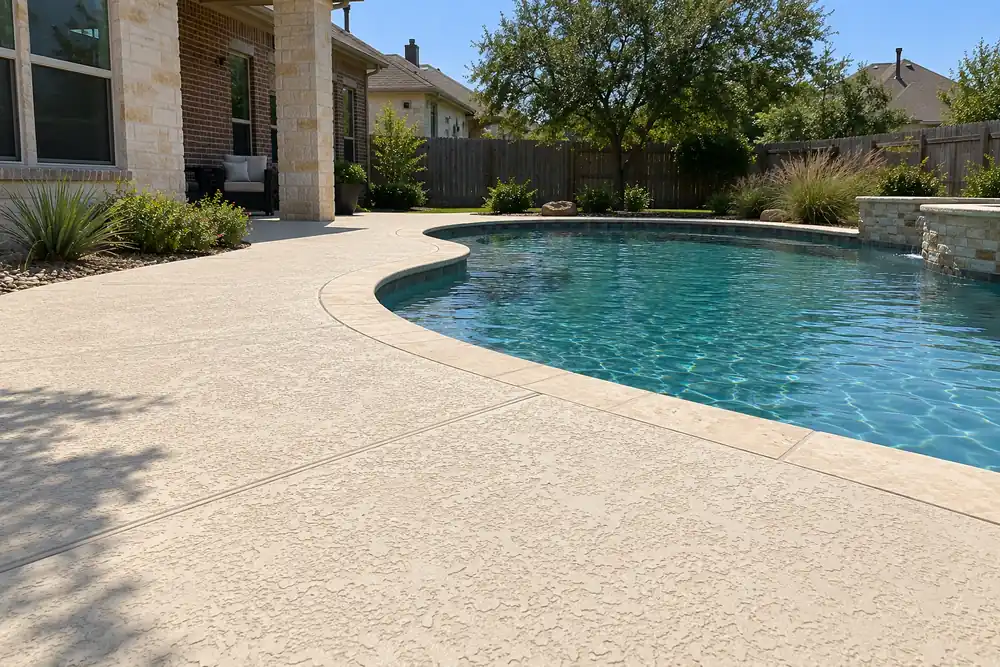
Concrete Repair in Garland, TX
Garland Elite Concrete handles concrete repair in Garland, Texas, from sealing cracks and patching spalled or scaled surfaces to cutting out and replacing broken sections of driveways, walks, patios and slabs. The Census Bureau's 2020-2024 American Community Survey puts the median year built for Garland's housing at 1978, and the National Ready Mixed Concrete Association (NRMCA) notes that concrete contracts and expands with changes in moisture and temperature and bends under load.
Call or send the form for a free estimate. We'll talk through the cause as well as the fix: roots growing under a slab, or a leaking pipe washing out its base, can leave replacement as the only option.
Call or request a free estimate any time, 24/7
No charge · answered 24/7
Get free estimates
Concrete crack repair
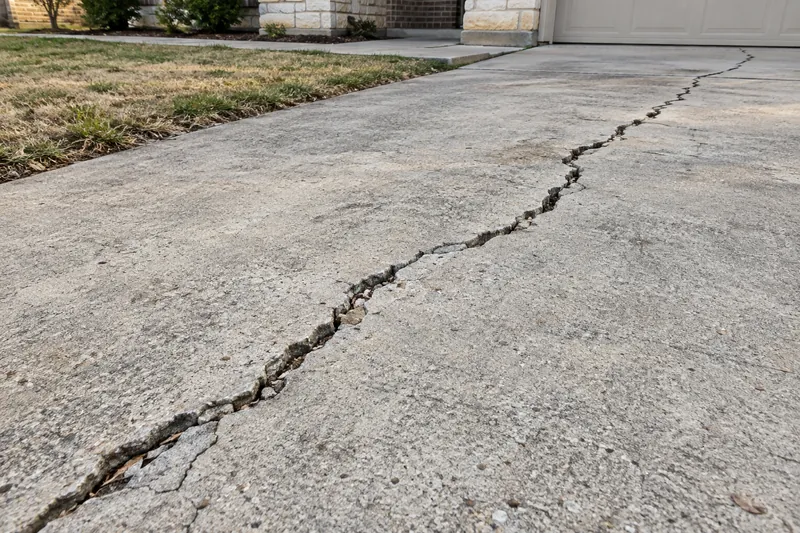
The NRMCA says it isn't possible to produce completely crack-free concrete, and that most random cracks appearing early, although unsightly, rarely affect a slab's structural integrity or service life. It traces most cracks to design and construction: missing or poorly planned joints, poor subgrade preparation, too much water in the mix, poor finishing, fast drying and little or no curing.
Reading a crack
Plastic shrinkage cracks, one of the common types the NRMCA lists, form while the concrete is still fresh; they usually run parallel, 1 to 3 feet apart, and stay shallow. Concrete that cracks within a few years of the pour may point to an installation error, such as too much water in the mix or too few control joints.
Filling, sealing and injecting cracks
For home flatwork, the usual guidance is epoxy filler for cracks ⅛ inch wide or smaller, and a foam backer rod pushed into cracks ½ inch or wider before they're filled. Where a crack will keep moving slightly, the Texas Department of Transportation's repair manual routs a V-shaped groove about 3/8 inch deep, centered on the crack, and seals it to keep water out. Epoxy injection is the structural option. ACI 224.1R guidance holds that it can restore integrity in cracks 0.002 inch wide or wider, but it may not suit cracks from rusting rebar or concrete expected to keep moving.
Cracks with one side higher
Deep, wide or spreading cracks, especially where one side sits higher than the other, may signal settlement and an unstable subgrade rather than a surface problem. When a whole section has dropped, concrete leveling can lift it back, and on a drive our concrete driveway repair page goes through the options.
Call or request a free estimate any time, 24/7.
(945) 441-5958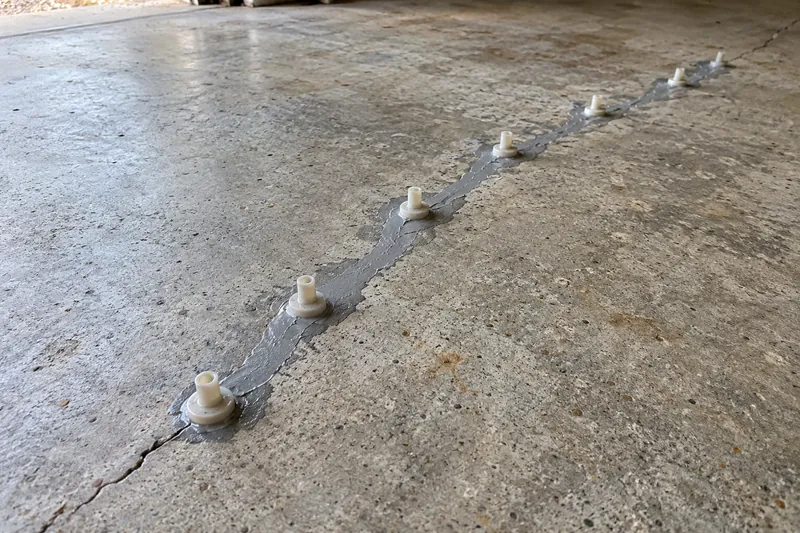
Concrete slab repair: spalls, scaling and broken sections
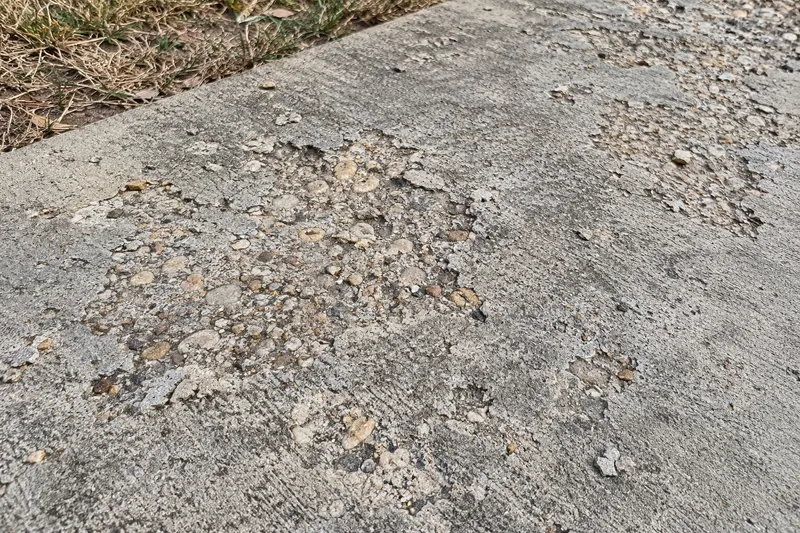
The usual causes of spalling, the peeling or chipping of a slab's top surface, are freeze-thaw cycles, deicing salts, poor finishing, improper curing and a bad mix. The three fixes are a color-matched patch, a resurfacing overlay, or tearing out and replacing the slab.
Partial-depth or full-depth
The American Concrete Pavement Association (ACPA) keeps partial-depth repairs to spalls confined to the upper third to half of the slab that don't expose the steel; when unsound concrete approaches or passes half the thickness, it places a full-depth repair instead. A partial-depth patch also can't correct a crack that runs through the whole slab.
Scaled and worn surfaces
For light to moderate scaling, the NRMCA says a thin bonded resurfacing over sound, cleaned concrete can work, with two cautions: the repair is only as strong as the surface it bonds to, and it won't match the original color. Our concrete resurfacing page covers overlays and sealers.
Rusting rebar
According to the NRMCA, rust takes up two to four times the volume of the steel it replaces, which cracks off the concrete cover. The American Concrete Institute's spall-repair bulletin (RAP Bulletin 7) calls for a structural engineer if corroded bars have lost cross-section. Parking lots and other business slabs are covered on our commercial concrete repair page.
- Rout-and-seal groove about 3/8 in. deep for a moving crack (TxDOT)
- Thin bonded resurfacing over sound concrete (NRMCA)
- Partial-depth repair: upper ⅓ to ½ of the slab only (ACPA)
- At least 2 in. of concrete cover over the steel (NRMCA)
- Poorly compacted fill, a common cause of sinking slabs
- Houston Black clay, high shrink-swell (USDA)
Call or request a free estimate any time, 24/7.
(945) 441-5958Why concrete cracks on Garland clay
The most common soil mapped inside Garland's city limits is Houston Black clay. The USDA describes it as having high shrink-swell potential: in dry periods it opens cracks ½ to 4 inches wide, and in most years those cracks stay open for 90 to 150 days. Around Dallas, this black clay can shift several inches vertically as moisture levels change.
Heat, wind and fresh concrete
The National Weather Service counts an average of 20 days a year reaching 100°F at DFW (1991-2020 normals). The NRMCA lists wind over 5 mph, low humidity and high air or concrete temperatures as the conditions behind plastic shrinkage cracks, and warns that slabs placed on a hot day followed by a cool night can crack from the quick change in temperature.
Outside Garland, Garland Elite Concrete also handles concrete repair in Travis Ranch.
Call or request a free estimate any time, 24/7.
(945) 441-5958Concrete repair cost
The ticket shows 2026 national ranges. At the low end a repair is one sealed crack. At the high end, complete slab replacement averages $6 to $15 per square foot.
These are national averages, not prices from Garland Elite Concrete. A repair price depends on the damage and what caused it, and the estimate is free.
- Crack filling (driveway), per linear ft
- $0.50–$3
- Crack filling and sealing, per crack
- $50–$800+
- Driveway repairs and patching, per sq ft
- $3–$8
- Structural engineer, per hour
- $100–$200
- Complete slab replacement, per sq ft
- $6–$15
National averages, 2026. Not a quote.
Call or request a free estimate any time, 24/7.
(945) 441-5958Questions about cracked and damaged concrete
What are the common mistakes to avoid when repairing concrete cracks?
Three come up again and again. Treating a patch as permanent: patches aren't watertight and any repair is temporary, although some last many years. Covering over the joints: QUIKRETE's resurfacer data sheet says existing control joints should be kept, and that cracks reflecting up into a new surface can't be completely prevented, especially where a slab lacks adequate joints or settles. Skipping preparation: inadequate surface preparation is the most common cause of cracking and delamination in a new overlay.
What is the best concrete crack filler for large cracks?
No single product suits every large crack. Sealant can fill cracks up to ¼ inch wide, a foam backer rod goes into any joint ½ inch or wider before filling, and uneven cracks wider than one inch could point to a structural problem underneath. For cracks over ¼ inch, spalling and discoloration, the usual answer is resurfacing or a concrete overlay rather than a filler. Garland Elite Concrete will look at the crack before suggesting a fix.
How can deteriorated concrete be repaired?
The American Concrete Institute's spall-repair bulletin sets out the usual steps for a slab: remove unsound concrete with 15- or 30-pound jackhammers (larger ones can damage the steel), clean the surface with high-pressure water of at least 3,000 psi or abrasive blasting, place the repair, and cure a ready-mix repair under wet burlap and plastic for at least 7 days. It recommends a pull-off test of the bond, with a target above 150 psi.
When is a crack in concrete a structural problem?
Width and movement are the signs to watch. Cracks of about ⅛ inch can usually just be repaired, but much wider ones call for a contractor to check whether the slab's structure is at risk. Cracks wider than ¼ inch typically indicate foundation problems that will cause more cracks to appear after resurfacing, and a structural engineer's inspection is the way to find the underlying cause.
Do I need a permit to repair concrete in Garland?
For concrete on public property, yes. Garland's code requires City permits for any work on concrete on public property, curbs, gutters and driveways included, and the City's Driveway / Sidewalk page says any repair to the public sidewalk needs a permit, with a Sidewalk Bond on file for whoever does the work. The private walk up to the front door is excluded. The City's pages list no permit rule for repairing other private flatwork, so call Building Inspection (972-205-2300) before work starts.
Free estimates for concrete repair
Garland Elite Concrete answers calls and estimate requests 24/7 for crack repair, spall repair and slab repair in Garland and nearby towns. Tell us what is cracked or broken and how long it has been that way.