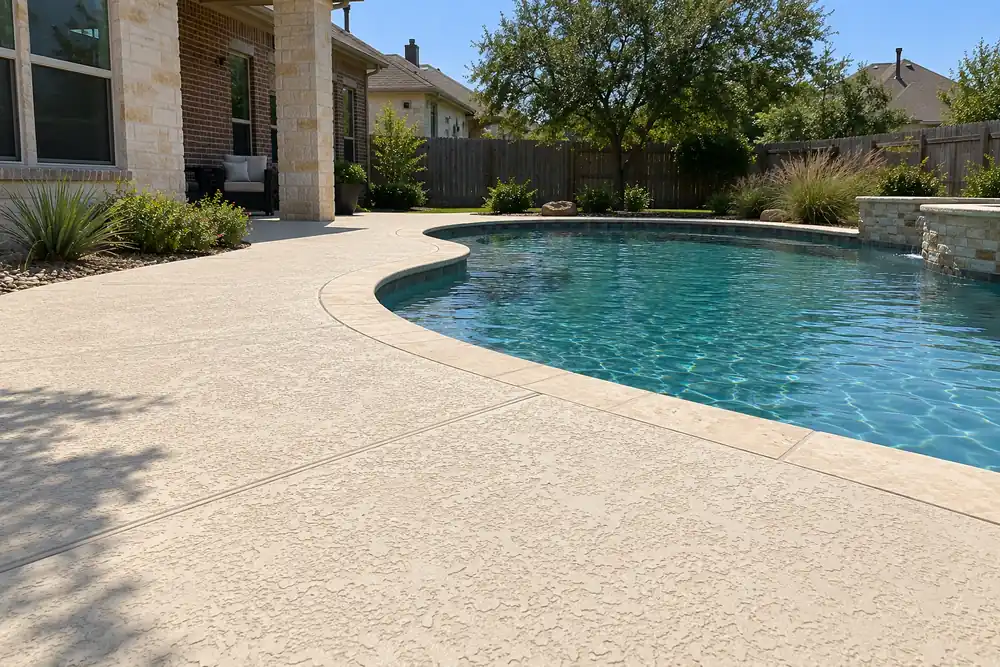
Concrete Resurfacing and Sealing in Garland, TX
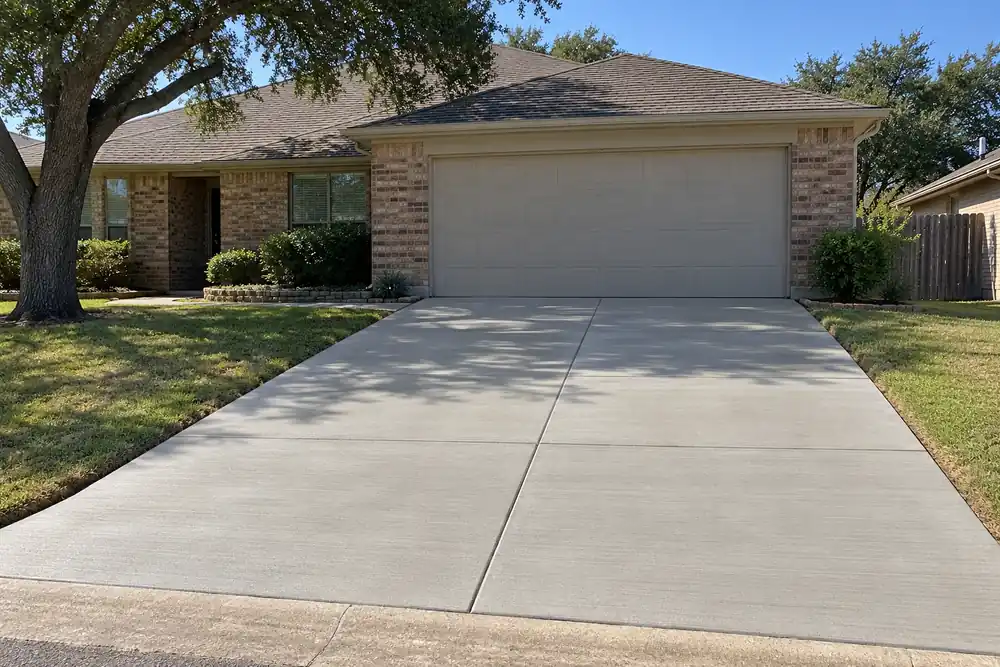
Garland Elite Concrete does concrete resurfacing and sealing in Garland, Texas, bonding a thin overlay onto worn, scaled or discolored driveways, patios, walkways and pool decks, and sealing new and old concrete against water. Resurfacing only works on sound concrete, because an overlay won't last long over a slab that is already damaged, cracked or shifting.
Call or send the form for a free estimate. We'll check whether the slab underneath is sound enough to resurface and talk through finishes and sealers.
Call or request a free estimate any time, 24/7
No charge · answered 24/7
Get free estimates
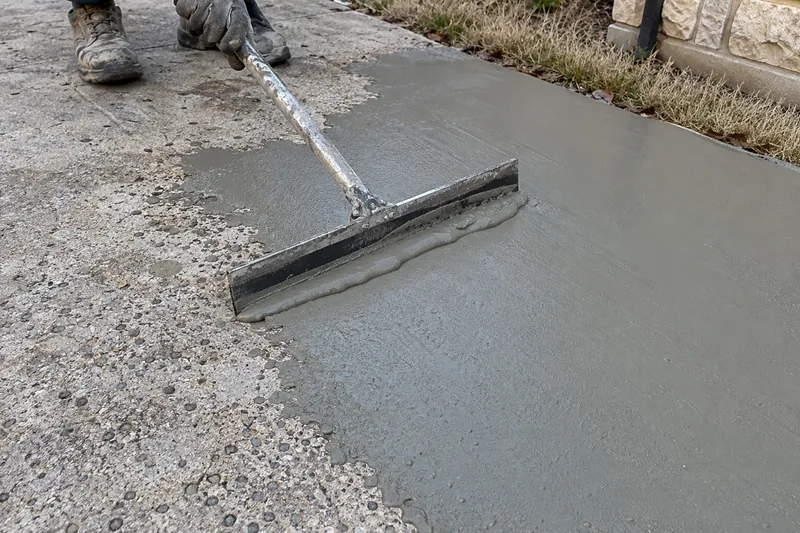
Resurfacers, overlays and deck coatings
Resurfacing products are thin toppings bonded to an existing slab, and their makers publish tight limits on how thick each one can go.
Thin resurfacers and fine overlays
QUIKRETE's data sheet describes its Re-Cap resurfacer as a polymer-modified portland cement product for thin repairs, applied from a feather edge of 1/16 inch up to 1/2 inch. Butterfield Color's T1000 Fine Overlay, a professional product, goes on from 1/16 inch to a maximum of 3/16 inch and reaches 5860 psi compressive strength at 21 days.
Spray-down deck coatings
Euclid Chemical's data sheet for its spray-deck grout lists pool decks, walkways and patio decks as common uses. The knockdown coating is sprayed on no more than 1/4 inch thick and sealed after at least 24 hours of drying, and a grip additive can go into the sealer. Deck finishes for pools are covered on our concrete pool decks page.
Color on the new surface
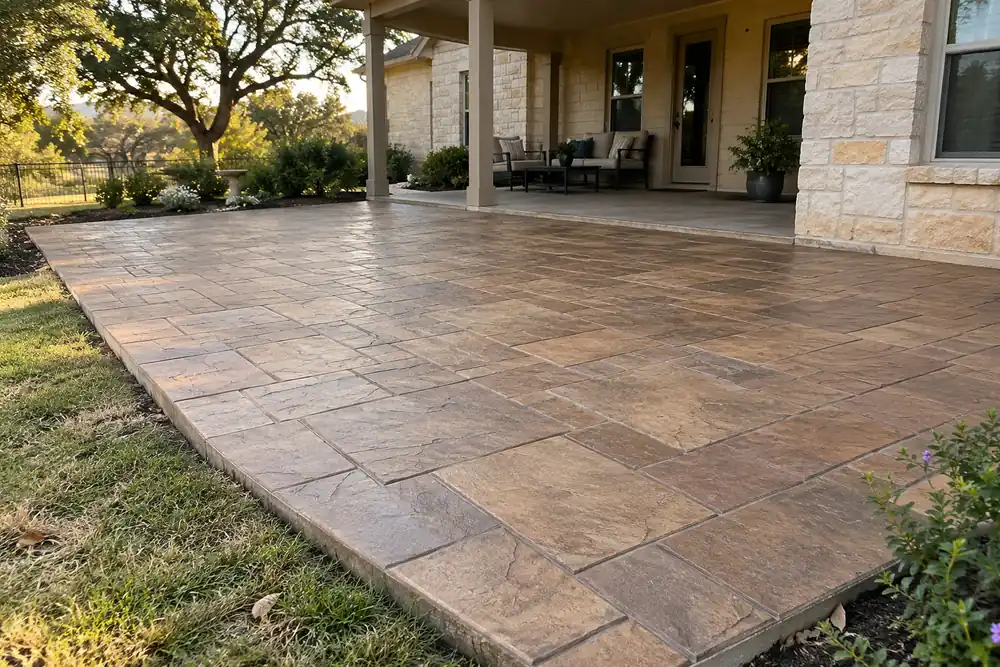
Stains, dyes, textures and saw cuts count as decorative overlays, one price tier above a basic overlay. Existing concrete can also be stained without an overlay; our stained concrete page explains how stains work.
Outside the city, Garland Elite Concrete also handles concrete resurfacing and sealing in Seis Lagos.
Call or request a free estimate any time, 24/7.
(945) 441-5958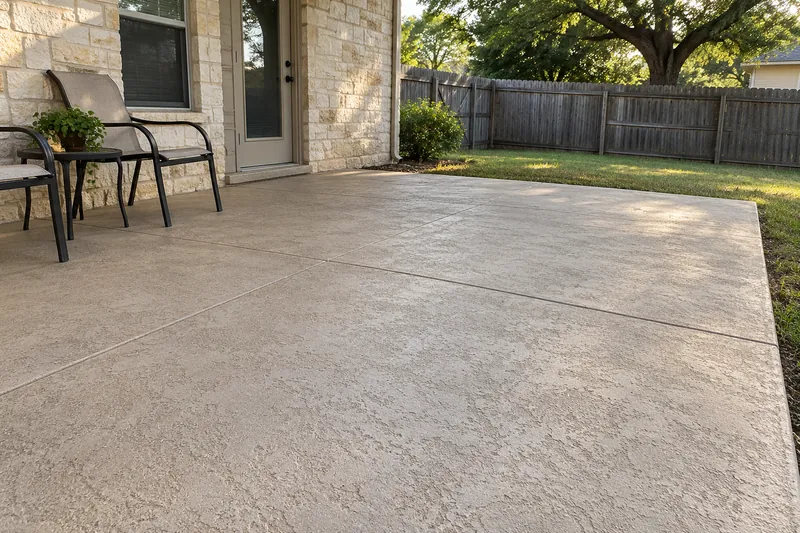
How concrete resurfacing is done
General practice from the product makers' data sheets and cost guides; your estimate covers your slab. The usual causes of early overlay failure are low-quality materials, poor surface preparation, and mistakes in mixing or application.
Check the slab
Concrete with minor flaking or cracks under 1/4 inch wide can be resurfaced. Large cracks, crumbling, spalling or structural problems call for replacement, as does a slab where the new layer would need to be more than two inches thick.
Clean and profile
QUIKRETE calls cleaning with a 2500 PSI pressure washer essential for a proper bond, and Butterfield Color wants the surface profiled to CSP 3-5 so the overlay doesn't delaminate.
Keep the joints
Existing control joints are carried up through the overlay. Even so, QUIKRETE says cracks reflecting up into the new surface can't be completely prevented, especially where joints are missing or the slab settles.
Apply the overlay
Thickness follows the product: up to 1/2 inch for Re-Cap, 3/16 inch for T1000. Butterfield Color says to install T1000 only when air and slab temperatures are between 45°F and 85°F.
Seal
The usual advice is to seal about a month after resurfacing. The American Society of Concrete Contractors (ASCC) says sealers go on in thin 1-3 mil layers, and that most solvent-based sealer problems come from applying them too thick.
Repair first, then resurface
Because an overlay only lasts on a sound slab, damaged areas need attention before it goes down; our concrete repair page covers crack sealing and patching. Cracks wider than 1/4 inch typically point to problems that will crack a new surface too. For a drive with cracks, spalls or sunken spots, our concrete driveway repair page walks through the choices.
Working around Garland heat and rain
Butterfield Color's 85°F ceiling for its overlay, and the ASCC's 90°F ceiling for water-based sealers, both sit below DFW Airport's normal highs of 95.6°F in July and 95.8°F in August (1991-2020 normals). The ASCC also says not to seal when rain or condensation is expected within 12 hours; at DFW, May is the wettest month and October the next wettest.
Call or request a free estimate any time, 24/7.
(945) 441-5958Concrete sealing: sealer types and resealing
Sealers come in two families. Penetrating sealers, the silanes and siloxanes, react inside the concrete's capillaries to keep out moisture and deicing chemicals, and they add no gloss or slipperiness. Film-forming sealers sit on the surface; acrylics are the most common, and pure acrylics resist yellowing better than styrene acrylics.
Matching the sealer to the surface
Acrylics suit jobs where easy application and economy matter, polyurethanes suit high-traffic floors that need scuff and stain resistance, and epoxies suit high-traffic floors and cement-based overlays. The ASCC adds that the higher a sealer's gloss, the more it enriches color, and that solvent-based acrylics generally enhance color more than water-based ones. For grip, it recommends enough anti-skid additive on exterior public walkways to be felt with a bare hand, a sealer that meets ASTM 2047 for slip resistance, and no added sand.
How often to reseal
The ASCC treats decorative sealer as a sacrificial coat. As a rule of thumb, high-traffic and sun-exposed areas need new sealer every 2-3 years, while lighter-traffic and interior areas last 4-5 years. One penetrating product lasts longer: PROSOCO estimates its siloxane water repellent's service life at more than 10 years, though it notes the product won't keep water out of cracks, defects or open joints.
Call or request a free estimate any time, 24/7.
(945) 441-5958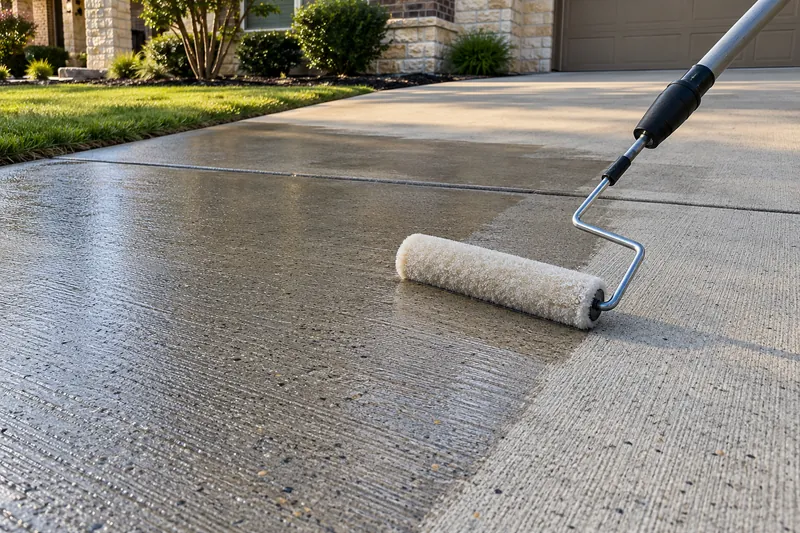
Resurfacing and sealing cost
In 2026 national figures, resurfacing jobs run anywhere from $600 to $13,000, with an average of $2,000; materials are often no more than 20% of the total, with labor averaging $1,600. Sealing alone averages $1,500 for a 1,000-square-foot area, or about $1.50 per square foot, also in 2026 figures.
These are national averages, not prices from Garland Elite Concrete. The estimate is free and based on your slab.
- Basic overlay, per sq ft
- $3–$7
- Decorative overlay, per sq ft
- $6–$10
- Stamped overlay, per sq ft
- $7–$20
- Resurfacing a 2-car driveway
- $1,200–$2,900
- Sealing, installed, per sq ft
- $1–$3
National averages, 2026. Not a quote.
Call or request a free estimate any time, 24/7.
(945) 441-5958Resurfacing and sealing questions
How do I seal my concrete driveway?
Start with timing: a new driveway should cure 28 to 30 days before the first sealer goes on. Then apply thin coats. The ASCC puts acrylic sealer on at about 5 mils wet, which dries to 1 to 2 mils. At 70°F, a sealed surface is typically dry to the touch in 1 to 2 hours and ready for light foot traffic in 3 to 4 hours.
How long does concrete resurfacing last?
A high-quality, professionally installed resurfacing product lasts 8 to 15 years on average before any repairs are needed, and sometimes up to 25 years with consistent maintenance and a favorable climate.
Is resurfacing cheaper than replacing concrete?
Per square foot, yes: national driveway repair averages put concrete driveway resurfacing at $3 to $5 per square foot and replacement at $6 to $15. The saving only holds on a sound slab, and the first step above covers when to replace instead. At a free estimate, Garland Elite Concrete can talk through which one your concrete needs.
Why did my concrete sealer turn white?
The ASCC's sealer guide says whitening happens when moisture, either water vapor or solvent, gets trapped in the layers of sealer. Where the white is efflorescence under the sealer, its permanent fix is to strip the sealer and give a light acid wash of 20-40 parts water to 1 part muriatic acid, or to use an efflorescence remover. Removing old sealant typically costs $1 to $3 per square foot.
How soon can you walk or drive on resurfaced concrete?
It depends on the product. QUIKRETE's data sheet says its Re-Cap resurfacer can be walked on in 8 hours and driven on in 24 hours. Once sealer goes on, the ASCC says to keep cars and furniture off it for a full 24 hours or more.
Free estimates for concrete resurfacing and sealing
Garland Elite Concrete answers calls and estimate requests 24/7 for resurfacing and sealing driveways, patios, walkways and pool decks in Garland and nearby towns. Tell us what the surface looks like now.