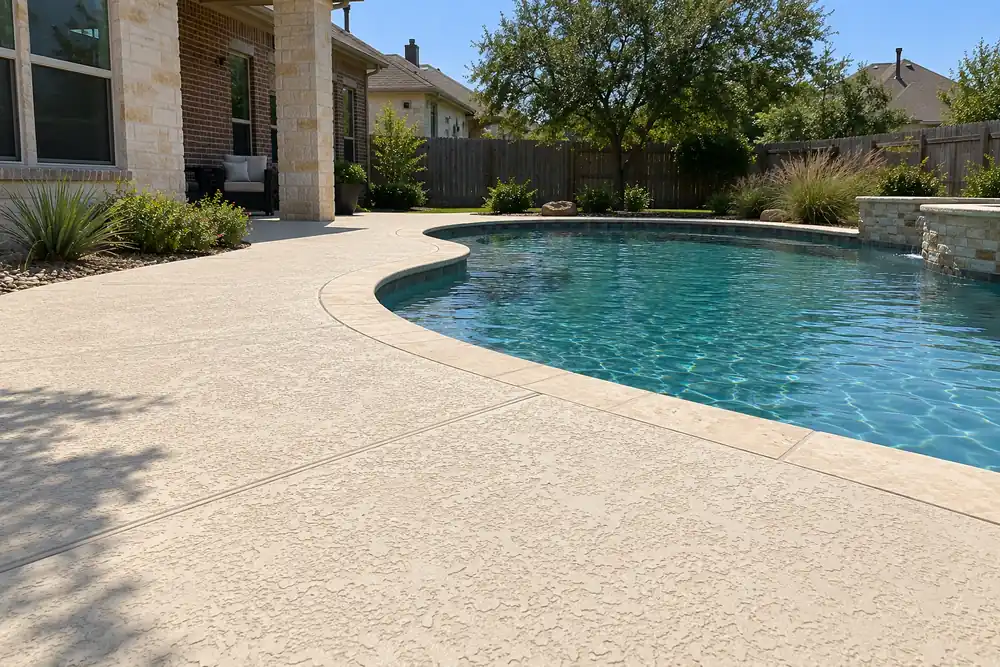
Concrete Leveling in Garland, TX
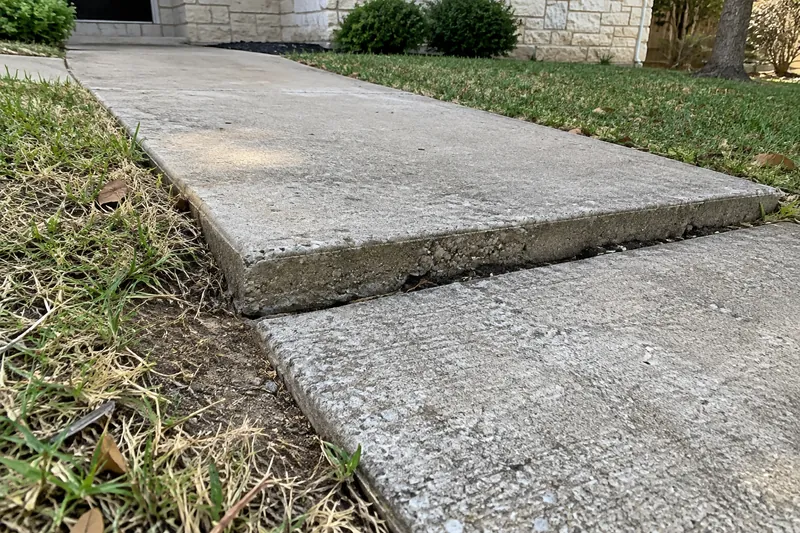
Garland Elite Concrete does concrete leveling in Garland, Texas, lifting sunken driveways, sidewalks, patios, steps and pool decks by pumping cement grout (mudjacking) or polyurethane foam under the slab. The City's own Street Department uses the same idea on streets: where settled pavement is otherwise in good condition, its contractor can inject polyurethane underneath to lift it back to its original elevation.
Call or send the form for a free estimate. We'll talk through why the slab dropped, which lifting method suits it, and whether lifting or replacing makes more sense.
Call or request a free estimate any time, 24/7
No charge · answered 24/7
Get free estimates
Mudjacking and polyurethane foam leveling
Both methods are forms of slabjacking: pumping a grout mixture or foam beneath a sunken slab to lift it back to its original level. They differ in weight, hole size, speed and price.
Mudjacking with cement grout
Slabjacking grout is water and portland cement with some mix of limestone dust, fly ash or sand, plus additives. Mudjacking can be done in almost any weather and often costs less than half as much as replacing the slab.
Polyurethane foam lifting
Alchatek, a foam maker, puts lifting foam at 2-4 pounds per cubic foot, against up to 100 pounds per cubic foot for mudjacking material, and says foam resists water, which helps prevent future erosion and settling. NCFI Polyurethanes' data sheet for its TerraThane 24-003 slab-lifting foam, which carries a Missouri City, Texas address, lists a compressive strength of 80 psi, 95% cure at 30 minutes and full cure at 24 hours.
Holes and durability
Mudjacking injection holes are 1.5 to 2.0 inches across, and foam holes 0.50 to 0.63 inch. Foam is waterproof and won't erode, while mudjacking slurry is long-lasting but can wash away over time.
- Injection holes: 1.5-2.0 in. for mudjacking, 0.50-0.63 in. for foam
- Sunken slab lifted back toward its original level
- Void filled with cement grout or polyurethane foam
- Poorly compacted fill or shrinking soil, common causes of sinking
Call or request a free estimate any time, 24/7.
(945) 441-5958Why slabs sink, and when lifting isn't enough
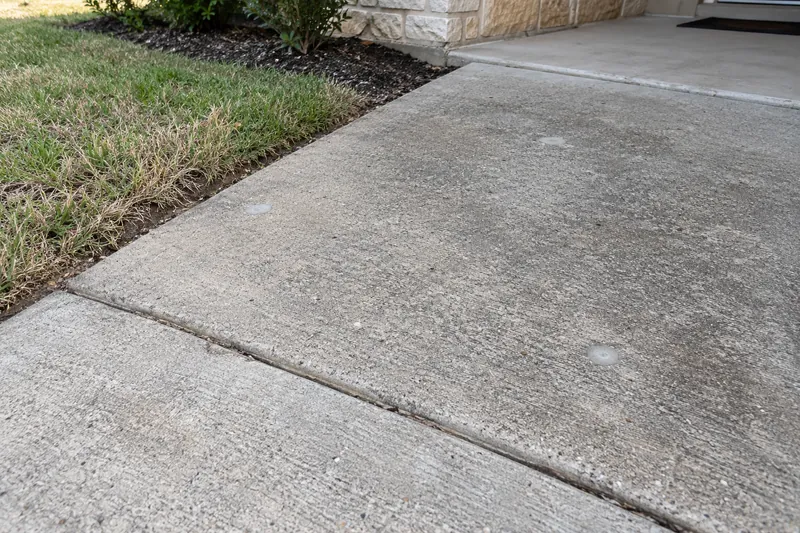
The usual culprit under sinking concrete is poorly compacted fill dirt, though erosion under the slab and shrinking soils are also possible causes. The most common soil mapped in Garland is Houston Black clay. In the USDA's soil survey it gets a "Very limited" rating for concrete driveways and sidewalks, with high shrink-swell as the reason, and the USDA's Natural Resources Conservation Service explains that rating as one where poor performance and high maintenance can be expected. Water soaks into this clay rapidly when it is dry and cracked, and very slowly once it is moist. Our guide to concrete in Garland clay soil covers the soil and weather in more depth.
When a slab needs more than a lift
Severe settling may call for replacing the slab and correcting the subgrade rather than raising it. A self-leveling compound only suits a slab that has sunk less than an inch, and only once the cause of the sinking has been fixed. Broken or crumbling concrete needs concrete repair first.
Sidewalk trip hazards
Under Garland's code, a public sidewalk counts as hazardous when adjoining sections, or the two edges of a crack, differ in height by 2 inches or more, and keeping the walk safe falls to the owner of the property beside it. The City's engineering details call for replacing sections whose cracks or joints are ¾ inch or more out of line vertically. Any repair to the public sidewalk needs a City permit, and the work is done under the Streets Department's supervision, whose decision is final. Walks and paths are covered on our concrete sidewalks page.
Outside the city, Garland Elite Concrete also does concrete leveling in Balch Springs.
Call or request a free estimate any time, 24/7.
(945) 441-5958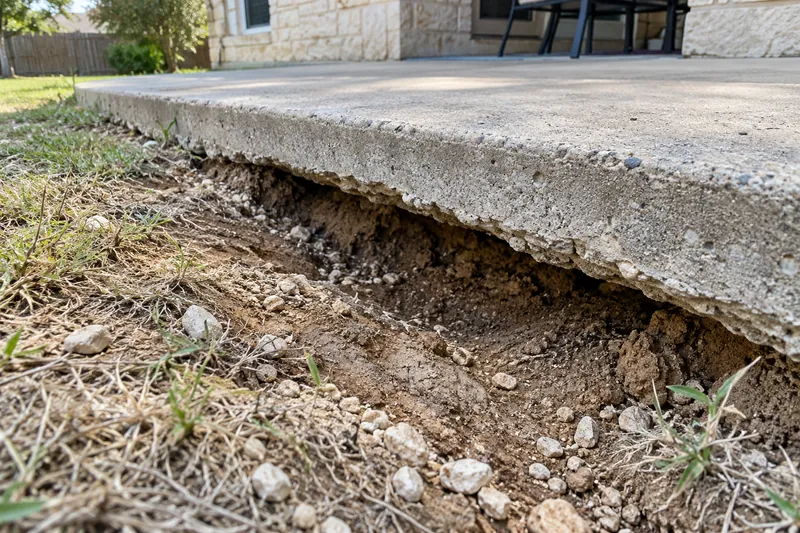
Concrete leveling cost in Dallas
Mudjacking in the Dallas area averaged $954 a job in 2026 figures, with most between $626 and $1,282, and labor at $45 to $70 an hour. Around Dallas, small residential leveling jobs such as a patio, sidewalk or driveway typically don't need permits, while right-of-way work may.
How long a lift lasts
A properly executed mudjacking job holds for 5 to 10 years or longer, and by a more conservative estimate it often costs 30% to 50% less than tearing out and replacing the concrete. Polyjacking lasts 10 to 15 years or longer when properly installed and maintained. For cracks and patches on a drive, see our concrete driveway repair page.
These are published averages, not prices from Garland Elite Concrete. The estimate is free.
- Sidewalk
- $300–$800
- Driveway
- $500–$1,200
- Patio
- $350–$900
- Garage floor
- $400–$1,500
- Pool deck
- $450–$1,100
Typical Dallas-area mudjacking prices, 2026. Averages, not a quote.
Call or request a free estimate any time, 24/7.
(945) 441-5958Questions about lifting sunken concrete
What are the drawbacks of concrete leveling?
It doesn't fit every slab. InterNACHI, the home inspectors' association, lists cases where mudjacking isn't appropriate: the slab has risen from expansive soil rather than sunk, the cause of the settling hasn't been addressed, the soil is swampy, or there's a sinkhole. Around Dallas, mudjacking is the cheaper option up front but doesn't last as long, while polyjacking is sometimes more expensive than replacing the slab outright, though faster and less disruptive.
Can cracked concrete be leveled?
Some cracking is expected: sealing surface cracks after a lift typically runs $75 to $200, and crack repair and sealing ($250 to $800+) is a common mudjacking add-on. Where the surface is spalling or otherwise damaged, though, InterNACHI says mudjacking isn't appropriate. Garland Elite Concrete will look at both the cracks and the settling at the estimate.
What is the average cost of polyjacking a concrete slab?
The 2026 national average is $3,000 to lift a 300-square-foot section, with most homeowners paying $1,500 to $4,500. Another estimate puts it at $8 to $25 per square foot, and most contractors charge a minimum job fee of $300 to $700 or more. In Dallas-Fort Worth sidewalk repair pricing, poly-foam slab lifting runs $8 to $20 per square foot.
Why is concrete leveling so expensive?
Mostly labor and minimums. Labor is 50% to 70% of a leveling job, averaging $625 to $875 for most projects, and in the Dallas area small jobs may carry a minimum charge, often around $500. Materials are a smaller share: local figures put mudjacking slurry at $100 to $400 and polyurethane foam at $300 to $900. Hard-to-reach slabs can also raise polyjacking labor costs by 20% to 50%.
How soon can you use a slab after it's lifted?
Mudjacked concrete is ready for light foot traffic within 24 hours and full vehicle use within 2 to 3 days. Polyurethane foam typically cures in about 15 minutes.
Free estimates for concrete leveling
Garland Elite Concrete answers calls and estimate requests 24/7 for lifting sunken driveways, sidewalks, patios and pool decks in Garland and nearby towns. Tell us what has sunk and roughly by how much.