Driveway Aprons and Approaches in Garland, TX
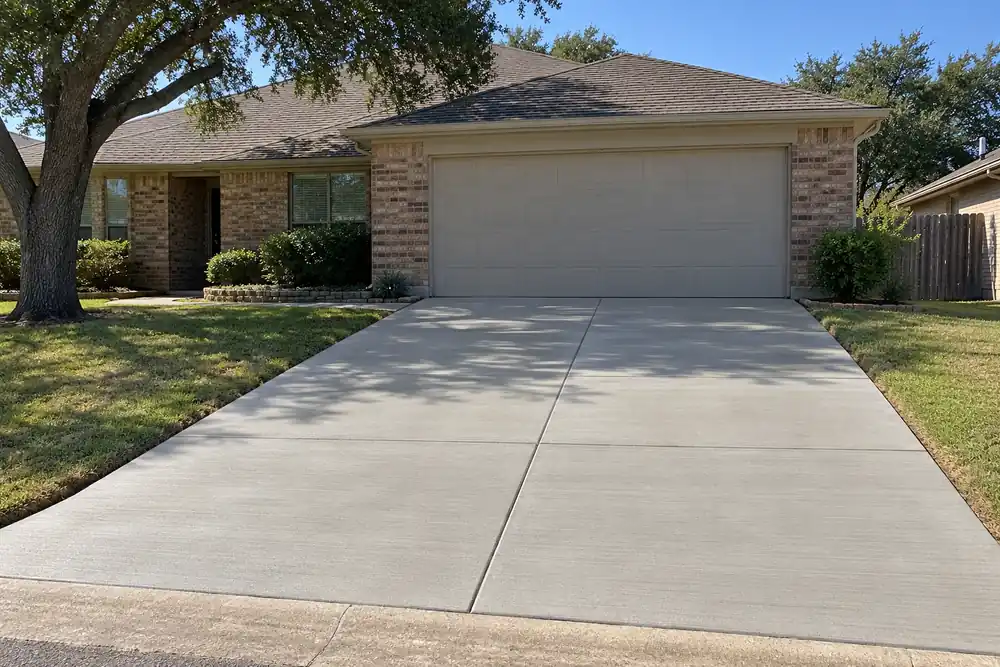
Garland Elite Concrete builds and replaces driveway aprons in Garland, Texas: the concrete approach between the street and your property line, which sits in the City right-of-way. In Garland it takes its own City permit and follows a heavier standard than the driveway behind it.
Call or send the form for a free estimate. We'll talk through the City's approach permit, the curb cut and how the new apron meets your driveway.
Call or request a free estimate any time, 24/7
No charge · answered 24/7
Get free estimates
Garland's driveway approach standard
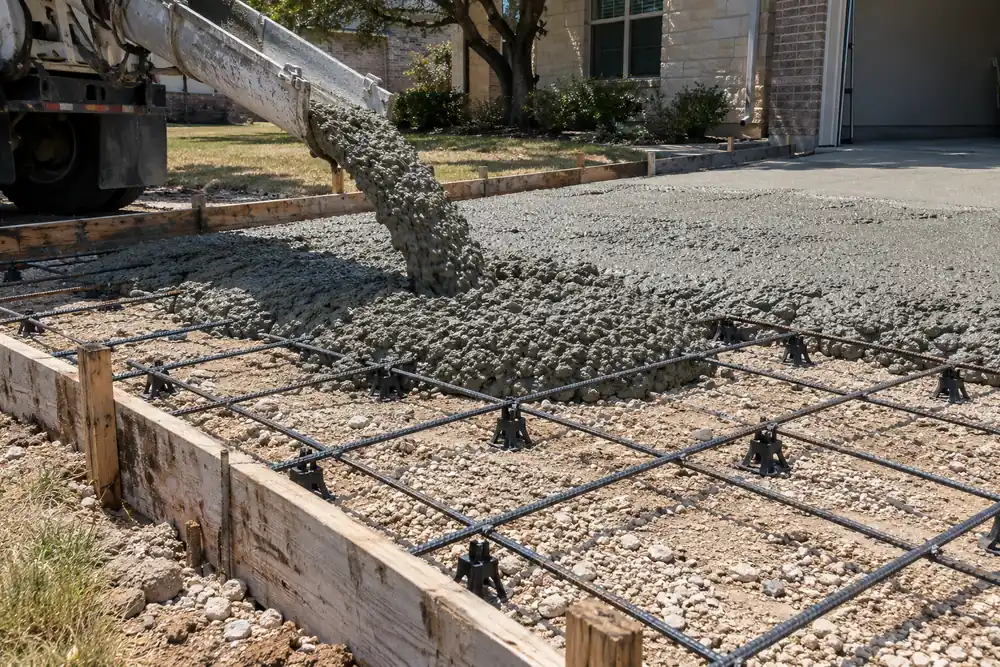
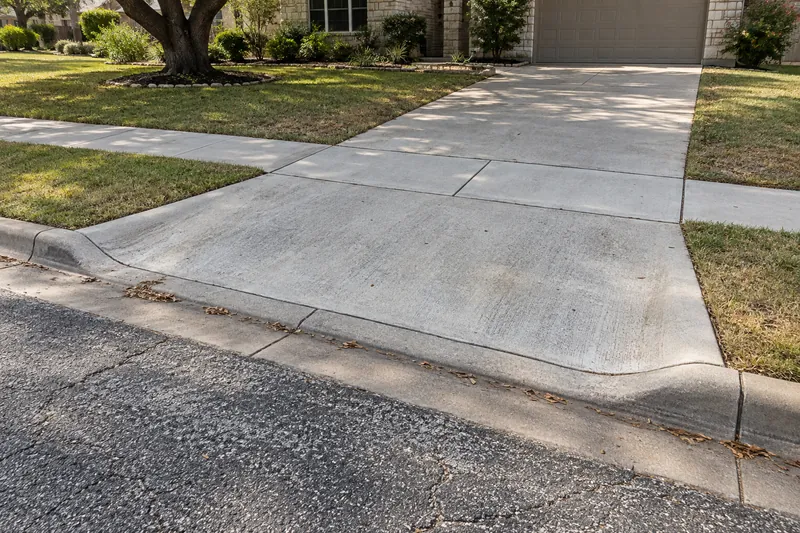
Garland's standard construction detail for a residential driveway approach calls for 5-inch Class "P1" concrete, which the City's Technical Standards Manual defines as 4,000 psi, reinforced with #4 bars 18 inches apart each way. The approach is at least 10 feet wide and at least 20 feet at the curb, with a 5-foot minimum radius and a ¾-inch full-depth redwood expansion joint at the property line.
Heavier than the driveway behind it
Garland's rule for the private driveway is 4 inches of concrete with Number 3 rebar at 18 inches on center, so the approach is an inch thicker, with larger #4 bars. That is in line with general practice: many municipalities require the apron to be 5 or 6 inches thick for extra load capacity, and Ohio Concrete's industry recommendation says codes usually set a 6-inch minimum for residential approach flatwork between the street and the sidewalk.
At the curb
Garland's Technical Standards Manual sets every approach at 90 degrees to the street, with a curb radius that ties into the street's 6-inch raised curb and stays entirely within the owner's property. A horizontal curb cut is made with a mechanical saw, no hand tools, ½ inch above the gutter. Street-side concrete is covered on our curb and gutter page.
Where the sidewalk crosses
The manual says any sidewalk crossing a driveway must meet state and federal ADA accessibility requirements, and the City's standard residential sidewalk is 4 feet wide and 4 inches thick. The walk itself is covered on our concrete sidewalks page.
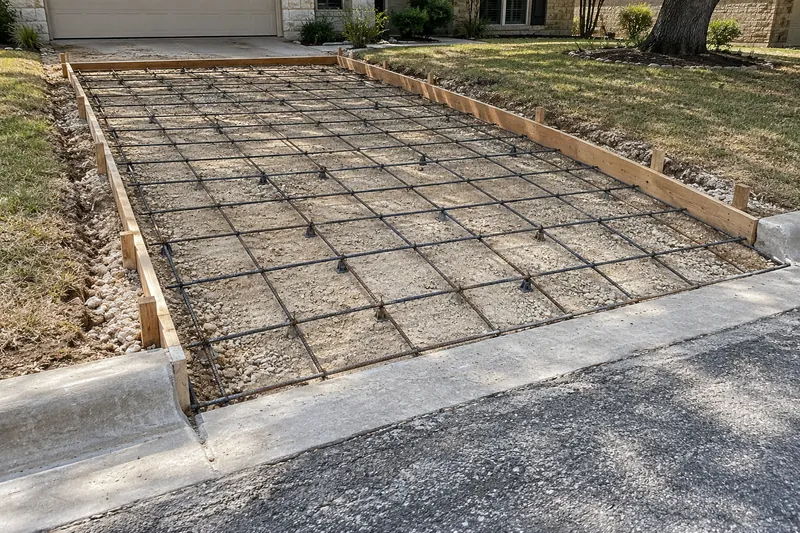
- ¾ in. full-depth redwood expansion joint at the property line (City of Garland)
- 5 in. Class "P1" concrete, 4,000 psi (City of Garland)
- #4 bars, 18 in. on center each way (City of Garland)
- No cushion sand under the pavement (City of Garland)
- Houston Black clay, high shrink-swell (USDA)
Call or request a free estimate any time, 24/7.
(945) 441-5958Approach permits, clearances and inspection
A driveway approach needs the City's Approach Permit, separate from any driveway permit, and the Transportation Department reviews and approves it. The City sets the fee, so confirm it when you apply. Garland's code names a Right-of-Way Permit and a Sidewalk and Driveway Approach Permit among the permits needed to build, repair or replace concrete on public property.
Site plans and clearances
The City's walk-and-approach permit form asks for a site plan to enlarge or repair an approach, for a circular drive, and for a new approach at an existing home. It also sets clearances: the drive's radius must start at least 10 feet from a storm inlet, and the driveway curb must sit at least 2.5 feet from a fire hydrant. The City's code allows no residential driveways off arterial streets designated Type A, B or C thoroughfares.
Inspection and utilities
Garland's construction notes require 24 hours' notice to the Engineering Department and a Texas811 call before digging, and work isn't accepted without a permit and a City inspection. Our guide to Garland driveway, approach and sidewalk permits walks through each permit.
Call or request a free estimate any time, 24/7.
(945) 441-5958Apron replacement and upkeep
The apron sits on City right-of-way, but its upkeep falls to the homeowner. The City's Street Department says it doesn't maintain sidewalks and curbs, and Garland's code makes the abutting property owner keep the sidewalk, parkway, curb and driveway in good and safe condition. After a City notice, a defect must be repaired within 30 days at the owner's expense. The Street Department runs a 50/50 cost-share program for sidewalk, curb and gutter repair; its FAQ doesn't mention approaches, so ask the department whether yours qualifies.
Older homes with gravel drives
Homes built on or before January 1, 1980 may keep an original, properly maintained gravel, asphalt or macadam parking surface, but the City still requires the approach apron to be concrete. If you're paving the drive behind the apron as well, our concrete driveways page covers the City's driveway rules.
Outside the city, Garland Elite Concrete also builds concrete driveway aprons in Sunnyvale.
Call or request a free estimate any time, 24/7.
(945) 441-5958Driveway apron cost
In 2026 national figures, concrete aprons cost $8 to $18 per square foot installed, with the top of the range reflecting stamped or permeable concrete, rebar or drainage. Aprons typically run 15 to 18 feet long and 12 to 24 feet wide, labor makes up 50% to 60% of the total, and a curb cut can add cost.
These are national averages, not prices from Garland Elite Concrete. The estimate is free.
- Installed, per sq ft
- $8–$18
- Labor, per sq ft
- $4–$8
- Small apron
- just under $1,440
- Larger apron
- up to $7,800
- Rebar, per foot
- $2–$3
National apron averages, 2026. Not a quote.
Call or request a free estimate any time, 24/7.
(945) 441-5958Questions about aprons and approaches
What is considered the apron of a driveway?
In Garland it's the approach: the part of the driveway in the City right-of-way, which needs its own Approach Permit. Ohio Concrete's industry recommendation describes it as the flatwork between the street pavement and the sidewalk; put simply, it's where a driveway crosses into public access areas.
How much does it cost to replace a concrete driveway apron?
The 2026 national average to install one is $4,400, with most homeowners spending $1,300 to $7,800. In Garland the work also needs the City's approach permit, and the City sets that fee. Garland Elite Concrete can price your apron at a free estimate.
Can a driveway apron be stamped or colored?
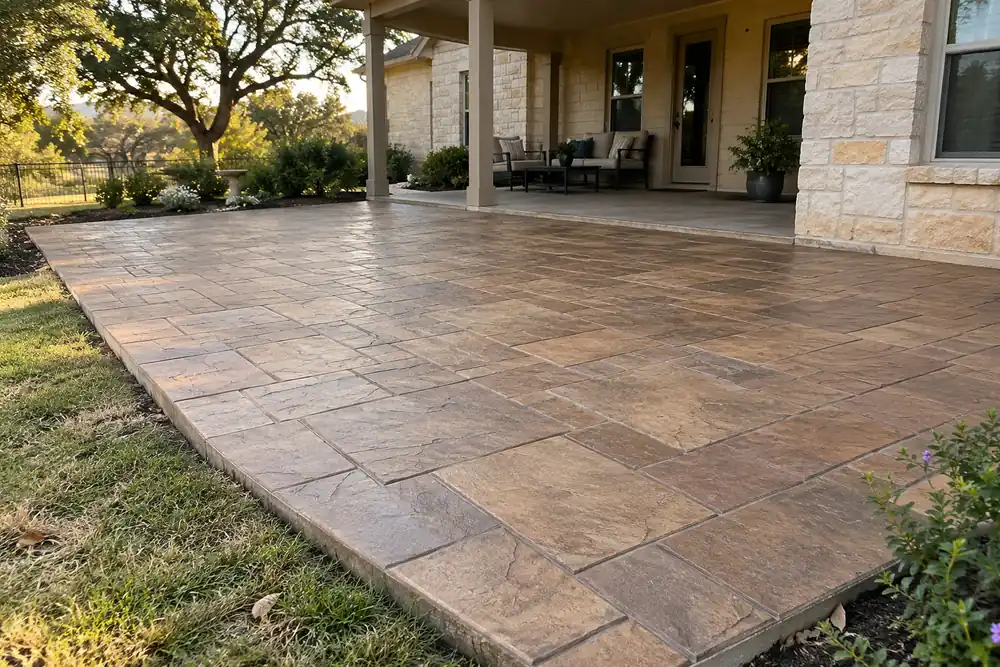
Stamped or permeable concrete sits at the top of the $8 to $18 per square foot national range, and most municipalities don't allow stamped, polished or colored finishes on public sidewalks. In Garland, all right-of-way paving must meet the City's Engineering Specifications, so ask the Transportation Department before choosing a decorative finish.
Can I widen my driveway apron or add a second one?
Within the City's limits. Widening the drive behind the apron needs the driveway permit, and at the property line the manual allows a single-family driveway 10 to 24 feet wide onto a street. A second apron onto the street means a circular drive, which the Transportation Director must approve; the City lets a circular drive with two approaches cover up to 65% of the yard, against 50% for other driveways.
Does apron work in Garland need a City-bonded contractor?
Yes, under the City's rules. The walk-and-approach permit form says the permit holder must use only contractors bonded with the City, and contractors working in the right-of-way must register with the City. Garland's code counts driveways as sidewalks for these rules and requires a $2,000 bond that commits the builder to maintain the work for two years. Ask any contractor you're considering for their City registration and bond.
Free estimates for driveway aprons
Garland Elite Concrete answers calls and estimate requests 24/7 for new and replacement aprons in Garland and nearby towns. Tell us how wide the drive is and what the curb looks like now.