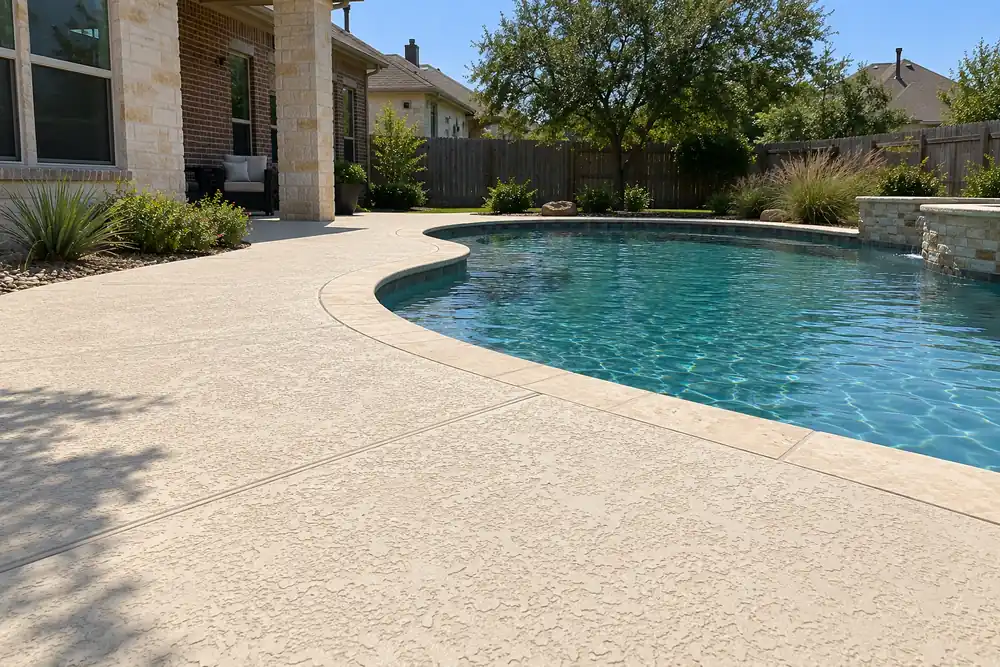
Concrete Slabs and Foundations in Lavon, Texas
Garland Elite Concrete pours concrete slabs and foundations in Lavon, Texas, from house foundations in the city's new subdivisions to patio, garage and shop slabs on existing lots. The U.S. Census Bureau counted 4,469 residents in the 2020 Census and estimates 11,888 for July 1, 2025, and its 2020-2024 American Community Survey puts about 92% of Lavon's housing units as built in 2000 or later.
Lavon sits on State Highway 78, two miles east of Lavon Lake, and most of its homes are in larger subdivisions such as Lavon Farms, Crestridge Meadows, LakePointe, Bear Creek and Grand Heritage. Call or send the form for a free estimate; we'll talk through the slab, the ground under it and the City's permit.
Call or request a free estimate any time, 24/7
No charge · answered 24/7
Get free estimates
Slab foundations for Lavon's new subdivisions
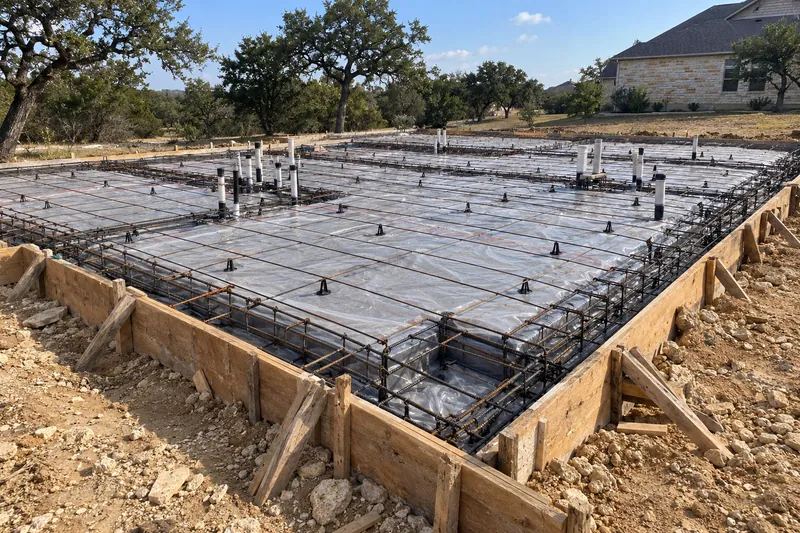
Every new house needs a foundation, and the City's 2022 Comprehensive Plan Update counted 7,578 single-family lots in some stage of development as of January 2022. Elevon, on the east side of the city, is planned for more than 4,000 residential lots; LakePointe, in the northeast along State Highway 78, for almost 700; and Trails of Lavon, beside the Bear Creek subdivision, has almost 600 approved lots. Grand Heritage was one of the first Planned Development subdivisions in Lavon, and its first phase alone added more than 1,200 homes. The same plan notes that large parts of the city are still undeveloped or farmed.
Young houses, mostly owner-occupied
The Census Bureau's 2020-2024 survey gives the city's housing a median build year of 2009, give or take two years, and counts 565 homes built in 2020 or later. About 95% of the housing units are single-family detached houses, about 90% of occupied homes are owner-occupied, and the median value of those homes is $394,300.
Post-tensioned slabs on shrink-swell ground
A structural or post-tensioned slab, which doesn't rely on the soil for support, is one of the usual defenses against expansive clay. In the Post-Tensioning Institute's (PTI's) words, post-tensioning is a cost-efficient answer to foundation problems on those soils, because the compression stressed into the concrete works against the tension that soil movement creates. PTI has published design guidelines for post-tensioned foundations on expansive soils since 1980, and they have been used under millions of homes. Under a house, a typical post-tensioned slab is 8 inches of 3,000 psi concrete, with tendons commonly spaced 48 inches apart.
We'll talk through the options with your soil report in hand. Ask Lavon's Building Inspection Department what engineering it needs with a new-home permit.
- Residential post-tensioned slab, typically 8 in. of 3,000 psi concrete
- Tendons, commonly 48 in. on center
- Vapor retarder of at least 10 mils under interior slabs (NRMCA)
- Fill compacted, no deeper than 24 in. of sand or gravel or 8 in. of earth unless approved (IRC)
Call or request a free estimate any time, 24/7.
(945) 441-5958Blackland Prairie clay and the City's soil-study rule
A slab is only as steady as the ground under it. According to the Handbook of Texas, the rich soils of the Blackland Prairie and water from Bear Creek drew settlers to the Lavon area in the mid-1850s. The Soil Science Society of America describes Houston Black clay, a Blackland Prairie soil found from north of Dallas to south of San Antonio, as high in smectite clay, which swells when wet, shrinks when dry and cracks the ground. Its booklet adds that construction on this soil is often plagued by cracking, that hydrated lime is often added to stabilize it, and that foundations need steel reinforcement.
What the City's paving standards require
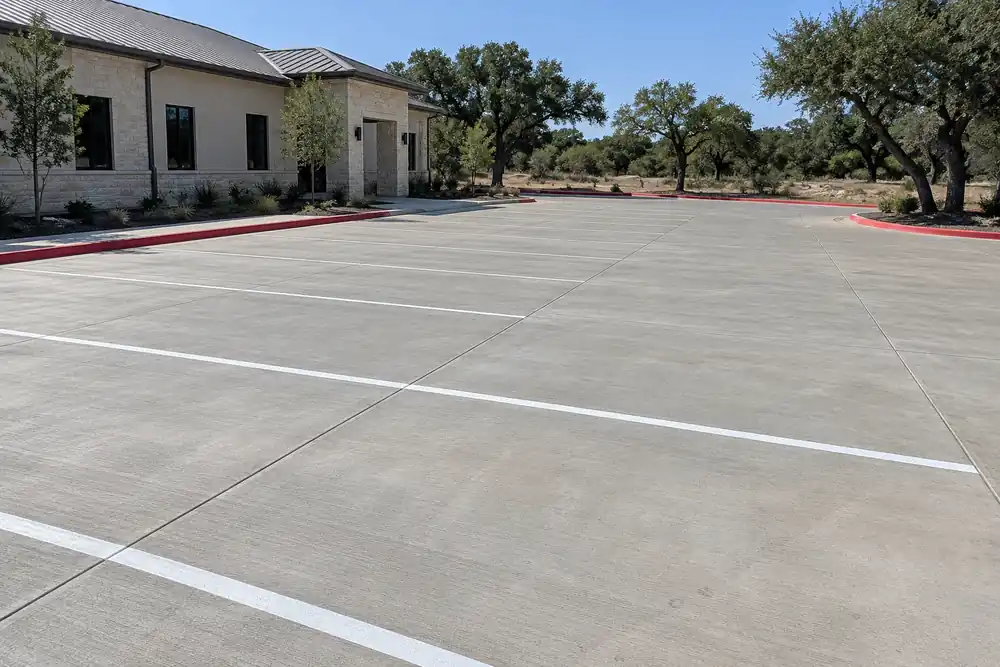
Lavon's Standard Construction Details require a geotechnical investigation for all pavement areas, covering the lime series, subgrade compaction and moisture, and the pavement section. Lime stabilization under paving must be at least 6%, and new driveways and other paving may open to traffic only once testing shows the concrete has reached 75% of its design strength. Street, parking and fire lane pavement must be at least 3600 PSI concrete and alley paving at least 4000 PSI, while sidewalks need at least 3000 PSI concrete, 4 inches thick, with #3 bars at 18 inches each way.
The soil-study rule is written for pavement. Whether it also applies to a private house slab isn't stated, so confirm that with the Building Inspection Department before the pad is built.
Call or request a free estimate any time, 24/7.
(945) 441-5958Permits, fees and the 20-foot driveway rule
Concrete work on a home lot in Lavon goes through a permit. The City's Building Inspection Department requires building permits for all residential construction, and its list names extending a driveway or patio and "any other types of concrete work." Work begun without a permit is subject to fines and increased permit fees. In November 2024 the City adopted the 2021 International Residential Code, with amendments, for residential building projects.
Lavon's schedule of fees for fiscal year 2026-27 lists a flatwork permit at $100.00 and a residential building permit at $1.03 per square foot under roof. The schedule is a scanned page with its fee column headed "proposed", so confirm the current fee with the City before you budget.
Driveway standards adopted in 2025
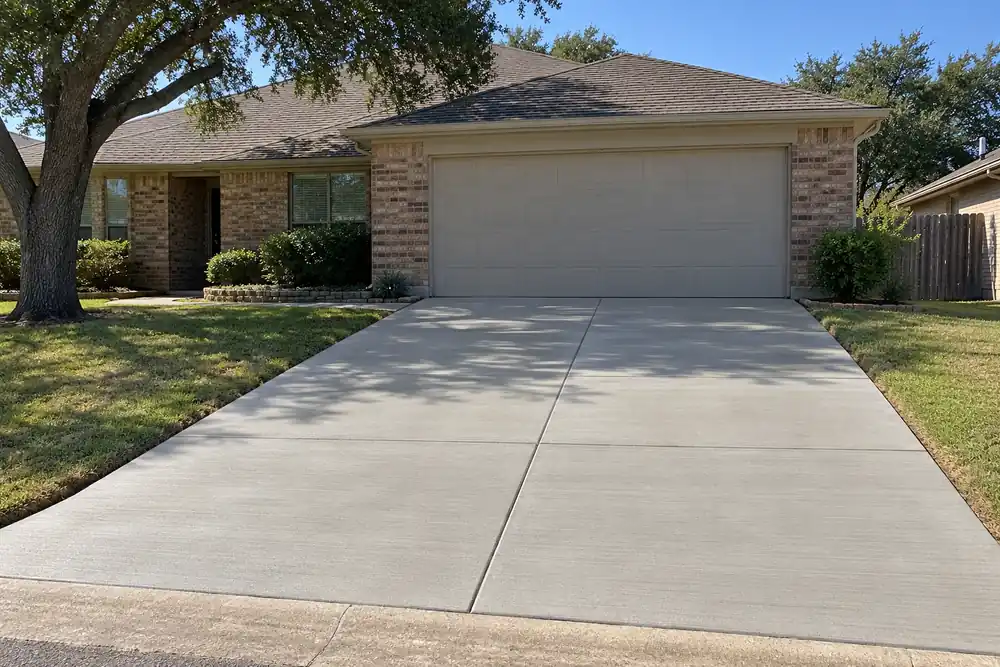
Ordinance 2025-02-03 requires residential driveways to provide at least 20 feet of concrete-paved space between the garage door and the right-of-way, as wide as the garage door, and keeps residential driveway approaches at least 20 feet apart. The same ordinance allows temporary concrete batch plants, which mix concrete on site, for up to six months, with one six-month extension, to finish a construction project.
Call or request a free estimate any time, 24/7.
(945) 441-5958From Thompson Switch to lake country
Before it was Lavon, the City says, the community was Thompson Switch, named for early postmaster Elbert C. Thompson. The Handbook of Texas says the town took its name from his son, Lavon Thompson, and that the post office opened in 1888. As a railroad flag stop, Lavon grew from about twenty-five people in the late 1880s to 300 by 1910. In 1980 the newly incorporated town had one business and 306 residents, and by 2000 it had 387; the City credits several smaller housing developments of the late 1990s and early 2000s with roughly doubling its population.
Lavon Lake lies two miles to the west. The U.S. Army Corps of Engineers, Fort Worth District, operates it, and the Handbook dates its construction from January 1948 to early 1953. The city has no frontage on the lake, a fact that surprised residents during outreach for the 2022 comprehensive plan. Closer to home are Eagle Pond, with its walking trail at Lincoln Ave and Harrison Ln in Bear Creek, and City Hall, whose Community Room was once the historic elementary school cafeteria; the City has reserved more than 20 acres of open space near City Hall for a future park.
Call or request a free estimate any time, 24/7.
(945) 441-5958Slab and foundation cost in the Dallas area
In 2026 Dallas figures, a typical foundation runs $3,134 to $11,714, about $7,427 on average, with soil conditions, site access and foundation type driving the price most. The Dallas area's Blackland Prairie clay is highly expansive, and the structural reinforcement foundations on it need pushes the cost up. A new slab runs $4 to $8 per square foot in the same 2026 Dallas figures, and a soil test costs $500 to $2,000 nationally, going by 2025 prices.
None of these figures is a price from Garland Elite Concrete; they are typical averages. A real figure depends on the lot, the soil report and the plan, and the estimate is free.
- Concrete slab
- $6,000–$15,000
- Monolithic slab
- $8,000–$18,000
- Stem wall
- $6,000–$18,000
- Pier and beam
- $8,000–$15,000
Typical 2026 Dallas foundation costs; not a quote.
Call or request a free estimate any time, 24/7.
(945) 441-5958Driveways, patios and walls around a new home
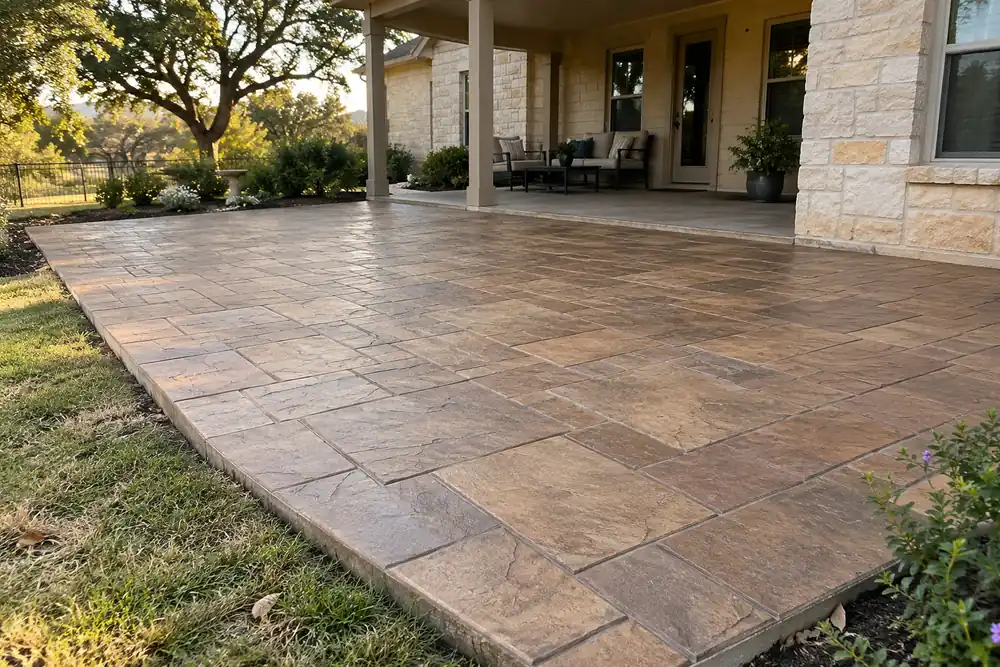
Beyond the foundation, we pour driveways, patios, sidewalks, garage floors and concrete pads, build retaining walls, and handle repair, leveling and resurfacing for older concrete. In Lavon each of these falls under the City's permit rule for concrete work. The fee schedule lists a retaining wall permit at $200.00 plus cost and an in-ground swimming pool permit at $400.00, worth knowing if a pool and deck are part of the plan.
Nearby, we also handle concrete driveway repair in Wylie and concrete slab foundations in Fate.
Call or request a free estimate any time, 24/7.
(945) 441-5958How a slab job runs
General practice from the building code and industry sources; your estimate covers your lot.
Permit and layout
The permit comes first; then the slab is laid out and formed to the plan.
Build the pad
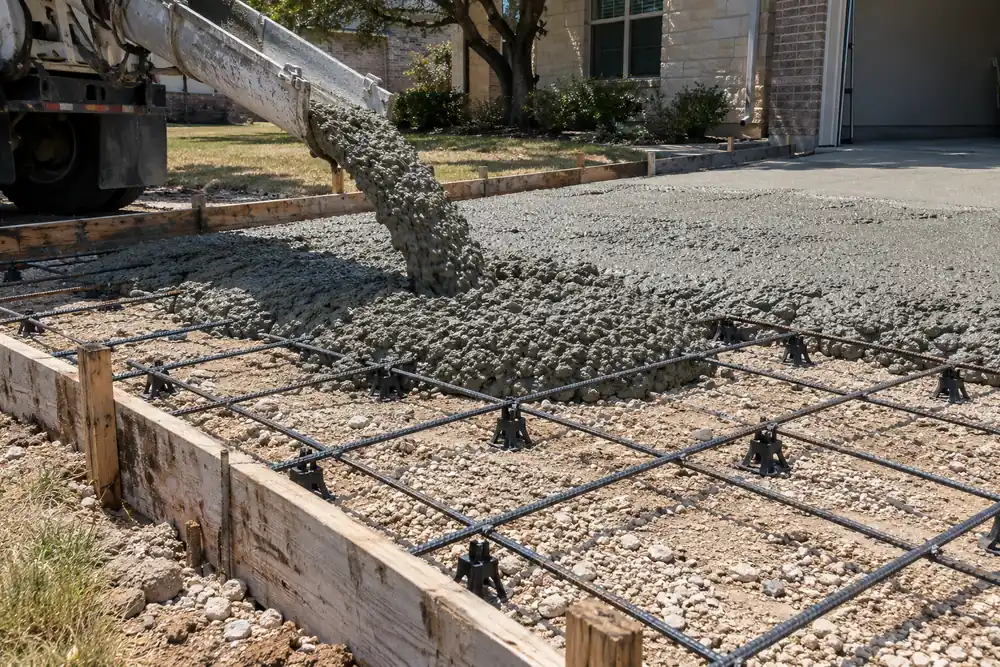
The International Residential Code wants fill under a slab compacted and, unless approved, no deeper than 24 inches of clean sand or gravel or 8 inches of earth.
Vapor retarder and steel
The National Ready Mixed Concrete Association recommends a vapor retarder at least 10 mils thick under interior slabs. The IRC requires slab reinforcement to be held between the center and the upper third of the slab during the pour.
Pour, finish and cure
NRMCA says curing should start right after finishing and normally continue 3 to 7 days, with the concrete kept above 50°F.
Stress the tendons
On a post-tensioned slab, the tendons are stressed once the concrete reaches 2,000 psi, typically within the 3 to 10 days PTI recommends. After that, the slab should never be cut or drilled casually.
Call or request a free estimate any time, 24/7.
(945) 441-5958Plan a slab or foundation with a free estimate
Garland Elite Concrete answers calls and estimate requests 24/7 for house foundations, patio and shop slabs, and garage floors in Lavon and nearby towns. Describe the slab you need and where it will sit.