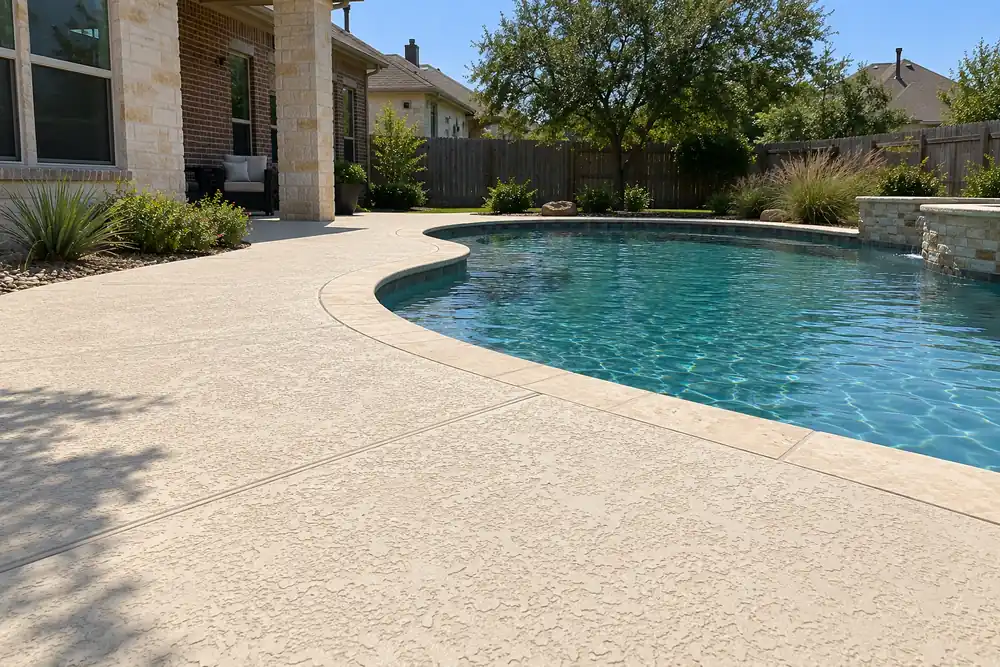
Concrete Pads and RV Pads in Garland, TX
Garland Elite Concrete pours concrete pads and RV pads in Garland, Texas, for RVs, trailers and cars, sheds and shops, hot tubs and equipment. Garland prohibits parking on an unimproved surface, so a spot to park an RV or trailer needs a surface the City accepts.
Call or send the form for a free estimate. We'll talk through the pad's size, what will sit on it, and the thickness and base that load and your soil call for.
Call or request a free estimate any time, 24/7
No charge · answered 24/7
Get free estimates
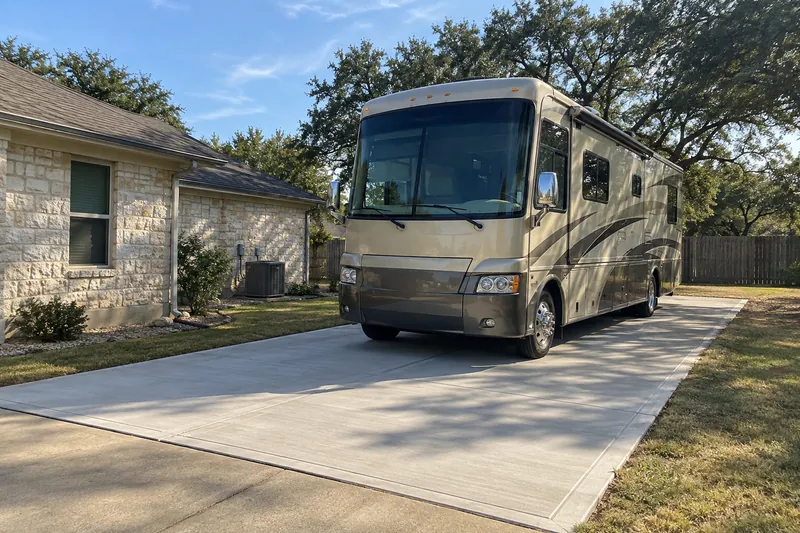
RV pads and parking pads
Sizing a parking pad
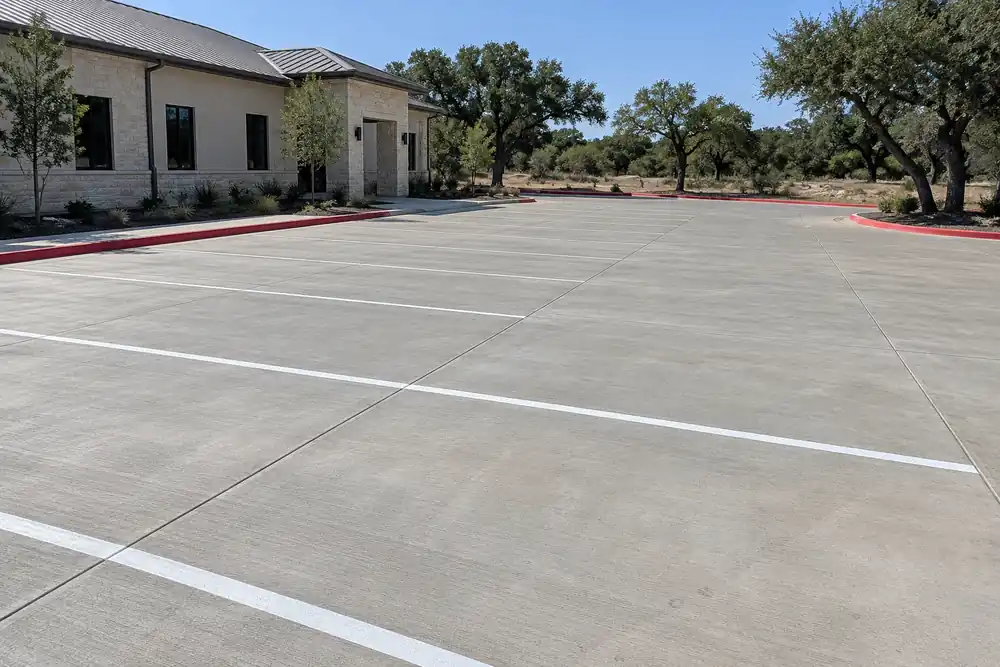
A parking pad is usually planned with at least 10 feet of width for each vehicle and 18 to 20 feet of length per car, or 22 to 24 feet for a full-size pickup. Those rules of thumb don't cover RVs, so we'll plan an RV pad around your vehicle's length and width and the room you need to back it in.
Pads beside the driveway
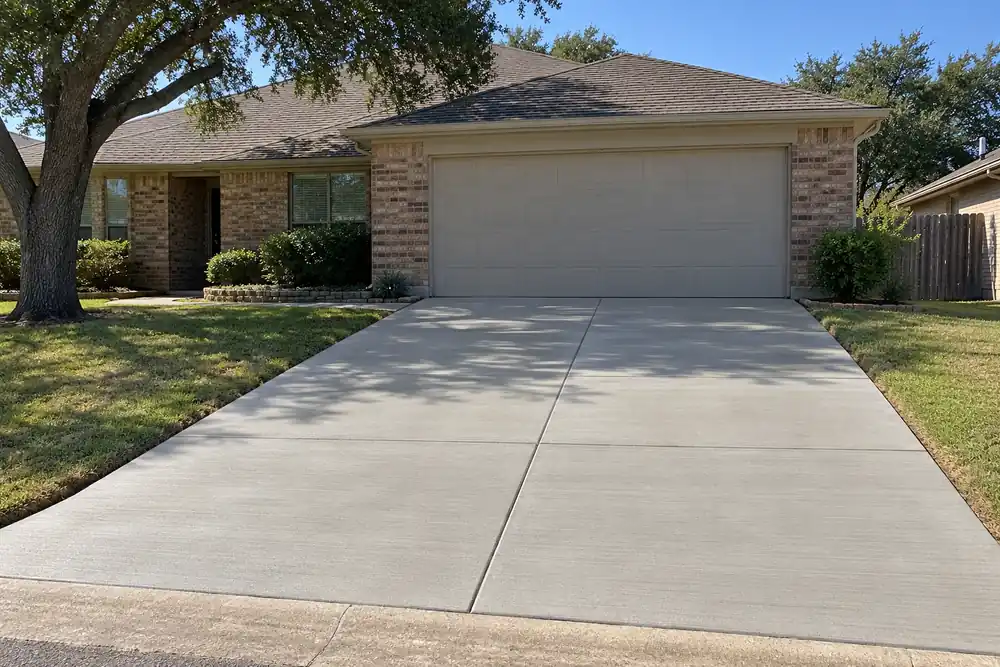
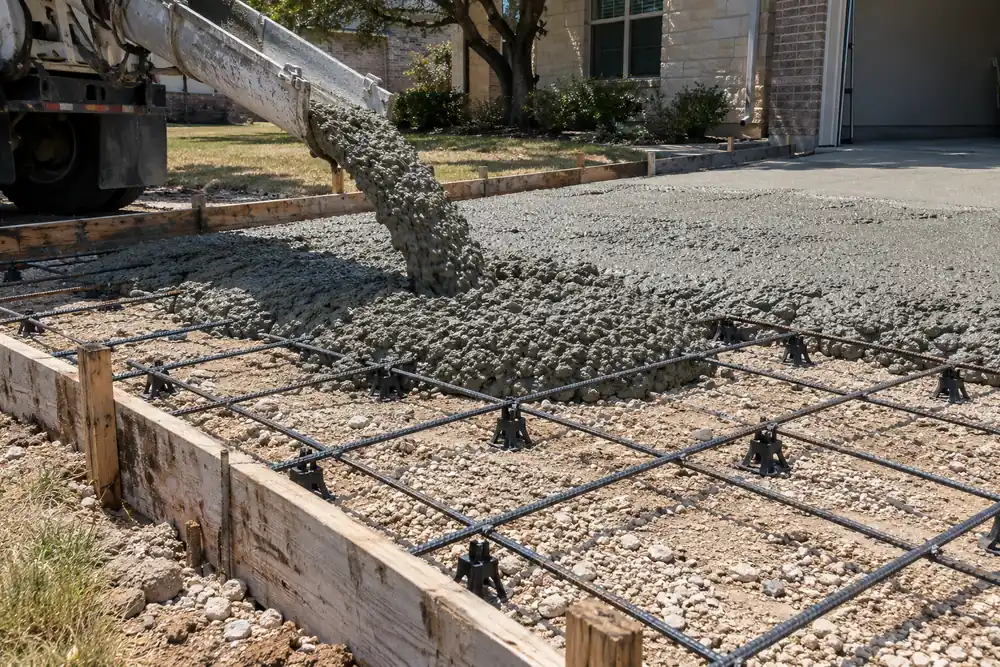
Widening an existing driveway or pouring a new one needs a City permit, and front- and side-yard driveways must be reinforced concrete or concrete pavers: 4 inches of concrete with Number 3 rebar 18 inches on center, set on rebar chairs. The City also bars driveways that cover more than 50% of a yard, or 65% for a circular drive with two approaches.
Outside the city, Garland Elite Concrete also pours concrete pads in Mobile City.
Call or request a free estimate any time, 24/7.
(945) 441-5958Pad thickness, reinforcement and joints
Reinforcement
Rebar or welded wire fabric belongs in any slab more than 5 inches deep, especially under heavy loads, while many slabs on a well-compacted base with properly spaced control joints don't need it. For driveways, the usual call is wire mesh at 4 to 5 inches thick and ½-inch (#4) rebar in a grid about 12 inches apart at 5 inches or more. According to the Tennessee Concrete Association, going from 4 to 5 inches thick adds about 20% to the concrete cost and nearly 50% to load capacity.
Joints and slope
The National Ready Mixed Concrete Association (NRMCA) spaces contraction joints 24 to 36 times the slab thickness, about 10 feet for a 4-inch slab and never more than 15 feet, keeps panels square or nearly so, and cuts joints at least a quarter of the slab depth. Within 10 feet of a house, the 2015 International Residential Code requires paved surfaces to slope at least 2 percent away from the building.
The base on Garland clay
Houston Black clay, the most common soil mapped in Garland, is rated "Very limited" for concrete driveways and sidewalks in the USDA's Dallas County soil survey, which defines those as reinforced slabs 3 to 6 inches thick. Expansive soil generally gets 2 to 8 inches of crushed rock, depending on how expansive it is, with soft spots dug out and replaced.
- Contraction joint at least ¼ of the slab depth, 1 in. minimum (NRMCA)
- Broom texture on exterior flatwork (NRMCA)
- 4 in. for cars; 5 or 6 in. for large RVs
- Rebar or wire fabric in slabs over 5 in.
- 2 to 8 in. crushed rock on expansive soil
- Houston Black clay, high shrink-swell (USDA)
Call or request a free estimate any time, 24/7.
(945) 441-5958Shed, shop and hot tub pads
Hot tubs
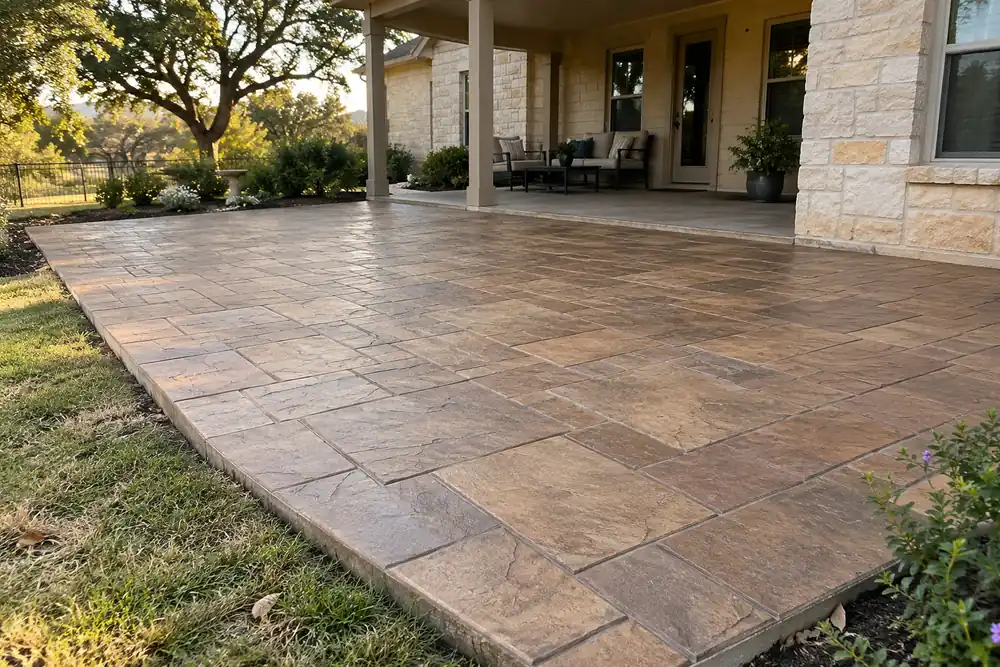
A patio slab is generally poured at least 4 inches thick, going to 5 or 6 inches under a heavy load such as a hot tub or an outdoor fireplace.
Sheds, shops and detached garages
The International Residential Code exempts garages, utility buildings and other unheated accessory structures from its vapor retarder rule, but NRMCA recommends a retarder at least 10 mils thick under interior slabs and calls it sensible planning under every interior floor slab. A shop or detached garage floor is covered on our concrete garage floors page, and building foundations on our concrete slabs page. Beyond Garland, Garland Elite Concrete also builds RV and shop pads in McLendon-Chisholm.
Sport pads
A slab for a hoop has its own specs, starting with the American Sports Builders Association's 3,000 psi minimum; they're on our concrete basketball courts page.
Call or request a free estimate any time, 24/7.
(945) 441-5958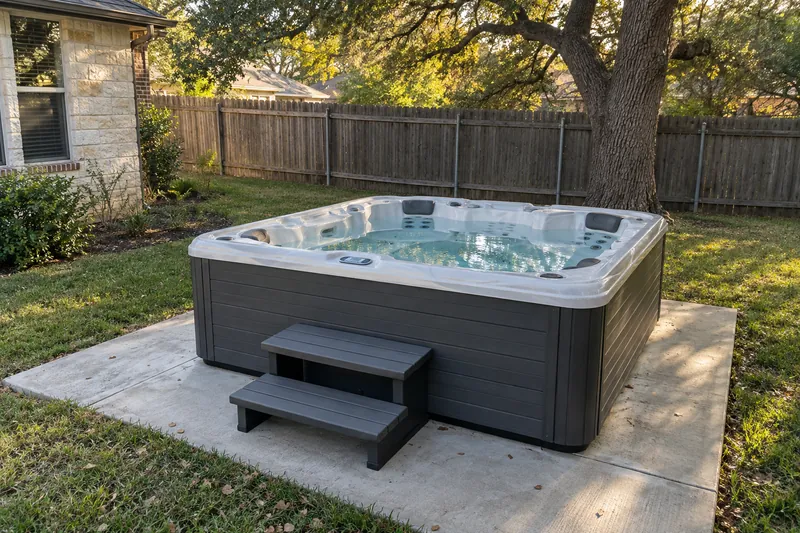
Concrete pad and RV pad cost
Thickness moves the price. National figures run $6 to $8 per square foot installed for a 4-inch slab and $8 to $10 for 6 inches. An RV pad of 200 to 700 square feet typically costs $1,200 to $8,400, and gravel for the base $1 to $3 per square foot.
These are published averages, not prices from Garland Elite Concrete. Your estimate is free and based on your site.
- Parking pad, 200 sq ft
- $1,200 average
- RV pad, 640 sq ft
- $3,840 average
- New slab, per sq ft
- $4–$8
- Reinforcement, per sq ft
- $0.50–$3
Dallas-area averages from 2026. Not a quote.
Call or request a free estimate any time, 24/7.
(945) 441-5958Questions about thickness, permits and parking
How thick should a concrete pad be for an RV?
A minimum of 4 inches is generally enough for cars and SUVs of 3,000 to 6,000 pounds, but a large RV can weigh 12,000 pounds or more, and a slab for it may need to be 5 or 6 inches thick. In Garland, front- and side-yard driveways must be reinforced concrete 4 inches thick with Number 3 rebar 18 inches on center.
What is the best material for an RV pad?
In Garland, the City sets the choices. Parking on an unimproved surface is prohibited, and rear-yard parking surfaces may be reinforced concrete, pavers, asphalt at least 4 inches thick over a 4-inch base, or gravel at least 6 inches deep inside a distinct border; they can't be reached by an unpaved alley. On lifespan, a properly installed and maintained concrete driveway should last 30 years or longer, against about 15 years for asphalt.
How much to pour a 30x30 concrete slab?
One estimate puts a 30' x 30' slab at $5,400 to $10,800 installed, or $6 to $12 per square foot; another puts the same size at $3,600 to $7,200, or $4 to $8 per square foot. Both are national figures.
Do I need a permit for a pad in Garland?
It depends where the pad goes. Garland requires a permit to widen a driveway or pour a new one ($88 on the City's Driveway / Sidewalk page), and an approach in the city right-of-way needs its own permit. The City's pages list no separate permit rule for a pad on private property, so call Building Inspection at 972-205-2300 before you start. City approval doesn't replace any HOA approval.
How soon can I park an RV on a new pad?
New concrete reaches about 70% of its potential strength about seven days after placement, enough for a car, but heavier vehicles such as RVs and large trucks should wait at least 28 days. The National Ready Mixed Concrete Association says curing should start right after finishing and normally continue 3 to 7 days.
Free estimates for RV, parking and shed pads
Garland Elite Concrete answers calls and estimate requests 24/7 for RV pads, parking pads and shed, shop and hot tub pads in Garland and nearby towns. Tell us the size and what will sit on the pad.